

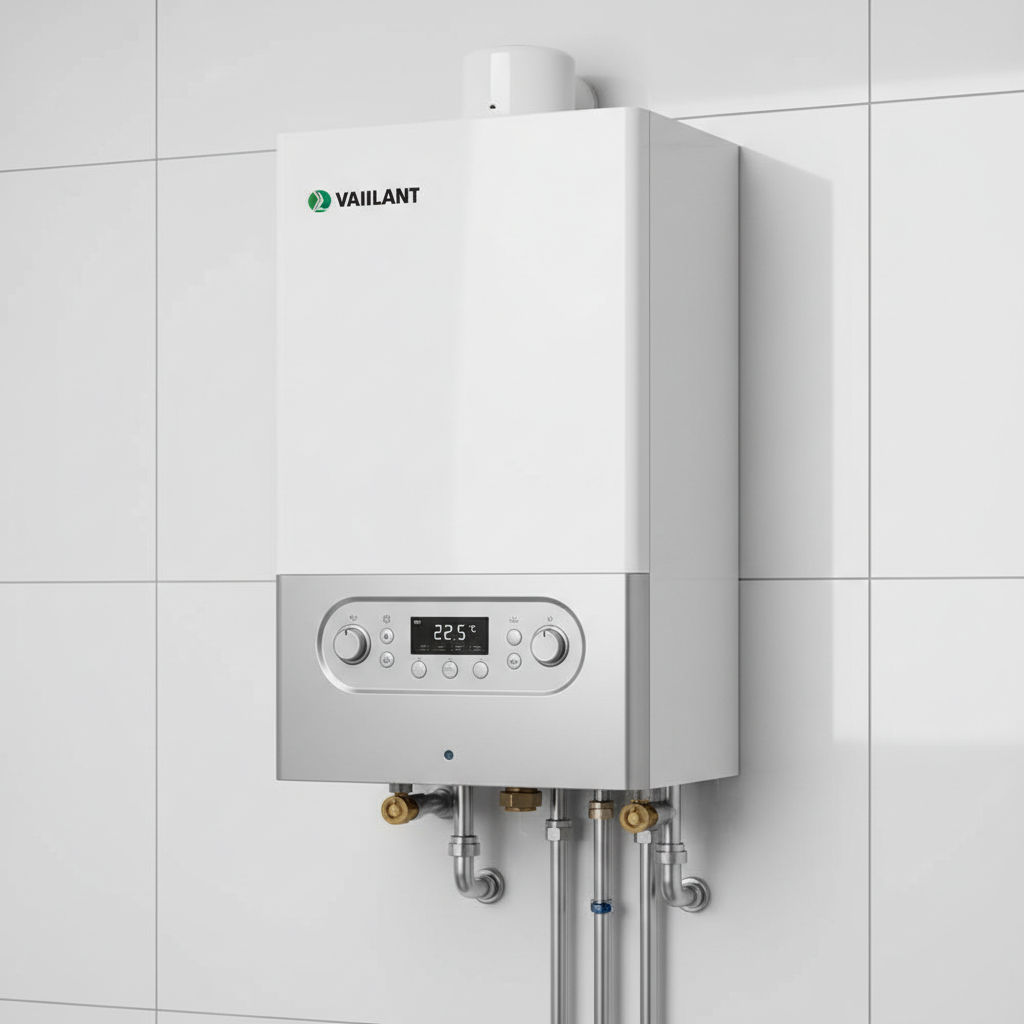
Your Vaillant boiler is showing F22? This low water pressure fault code means your system has dropped below 0.5 bar. Learn the five most common causes and how RARE engineers fix it.
Quick Answer
The Vaillant F22 fault code means your boiler's water pressure has dropped below 0.5 bar. The five most common causes are natural pressure loss over time, a leak in the heating system, a faulty pressure relief valve, expansion vessel failure, or a faulty pressure sensor. You can re-pressurise the system using the filling loop, but if F22 returns within days, you have an underlying leak or component fault that needs a Gas Safe engineer to diagnose and repair.
At a Glance
Typical Causes
Low system pressure, leak, faulty PRV, expansion vessel failure, pressure sensor fault
Average Repair Time
30–90 minutes depending on cause
Emergency?
Not dangerous, but no heating or hot water until fixed
Approx. Cost Range
£0 (DIY re-pressurise) to £350 (expansion vessel replacement)
Who Should Deal With It
Gas Safe registered engineer if not resolved by re-pressurising
Domestic or Commercial
Domestic
Risk Level
Low — no safety risk, but system damage possible if ignored
What does the Vaillant F22 fault code mean?
The Vaillant F22 fault code indicates that your boiler's water pressure has dropped below the safe operating threshold — typically below 0.5 bar. When the pressure sensor detects insufficient water pressure, the boiler locks out as a safety measure to prevent damage to the pump and heat exchanger. You'll lose both heating and hot water until the fault is resolved.
F22 is one of the most common Vaillant fault codes we see across London, particularly on the ecoTEC range installed in thousands of properties from Marylebone to Hampstead. While it can be alarming when your boiler suddenly stops working, F22 is often straightforward to resolve — though the underlying cause needs proper diagnosis to prevent it recurring.
The 5 most common causes of the Vaillant F22 fault
1. Natural pressure loss over time
The most frequent cause of F22 is gradual pressure loss in your central heating system. Just as a car tyre slowly loses air over months of use, heating systems naturally lose a small amount of pressure through microscopic leaks, temperature-driven expansion and contraction, and trapped air pockets. This is entirely normal and doesn't necessarily indicate a fault — but if left unchecked, the pressure will eventually drop low enough to trigger F22.
If your boiler pressure has been slowly declining over weeks or months and this is the first time F22 has appeared, simple re-pressurisation via the filling loop will likely resolve it. However, if the pressure drops again within days or weeks, there's an underlying issue that needs investigation.
2. A leak in the heating system
A more rapid loss of pressure usually indicates a leak somewhere in your central heating system. Leaks can occur at radiator valves, pipe joints, under floorboards, or — less commonly — inside the boiler itself. Even a tiny weeping joint can cause significant pressure loss over time, and leaks in hidden areas (under floors, behind walls, in ceiling voids) are notoriously difficult to spot without specialist equipment.
Signs of a system leak include:
- Pressure dropping repeatedly after re-pressurising
- Damp patches on walls, ceilings or floors
- Visible water staining near radiator valves or pipework
- A smell of damp or mould in areas where pipes run
- Higher-than-usual water bills if the filling loop is letting mains water into the system continuously
If you suspect a leak, our non-invasive leak detection service uses thermal imaging and acoustic equipment to pinpoint the source without damaging your property.
3. Faulty pressure relief valve (PRV)
The pressure relief valve is a critical safety component that releases excess pressure if it builds to dangerous levels. However, if the PRV becomes faulty — through wear, scale build-up or debris — it can release pressure unnecessarily, causing a continuous drop that triggers F22.
Signs of a faulty PRV include:
- Water dripping from the overflow pipe outside your home
- Needing to re-pressurise your system every few days
- Visible corrosion or mineral build-up on the valve
- Pressure rising above 3 bar when the heating is on, then dropping rapidly when it cools
PRV replacement is a straightforward job for a Gas Safe registered engineer and typically costs £120–£200 including parts and labour.
4. Expansion vessel failure
The expansion vessel accommodates the expansion of water as it heats up, preventing excessive pressure build-up. If the vessel loses its air charge, becomes waterlogged, or ruptures, the system pressure will fluctuate dramatically — rising too high when the heating is on and dropping too low when it cools, eventually triggering F22.
Common expansion vessel problems include:
- Loss of air pressure within the vessel (recharge needed)
- Perished or ruptured diaphragm (replacement needed)
- Waterlogging — water has entered the air space
Our engineers test the expansion vessel during every boiler service and can recharge or replace it before it causes an F22 fault.
5. Faulty pressure sensor
In some cases, the F22 fault code is triggered not by actual low pressure but by a faulty pressure sensor. The sensor monitors water pressure and sends signals to the boiler's control board — if it fails, it may report low pressure even when the system is correctly pressurised. This is less common than the other causes but does occur, particularly on older ecoTEC models or systems with sludge contamination that has damaged the sensor membrane.
Signs of a faulty pressure sensor include:
- F22 appearing even when the pressure gauge reads between 1.0 and 1.5 bar
- Inconsistent pressure readings between the gauge and the digital display
- F22 recurring shortly after sensor replacement if sludge is the root cause
How to fix the Vaillant F22 fault code
Step 1: Check the pressure gauge
Look at the pressure gauge on the front of your Vaillant boiler. If it reads below 0.5 bar, F22 is being triggered by genuine low pressure. If it reads between 1.0 and 1.5 bar but F22 is still showing, the pressure sensor may be faulty — call an engineer.
Step 2: Re-pressurise the system
If the pressure is genuinely low, you can re-pressurise using the filling loop:
- Turn off the boiler and allow it to cool for 20 minutes
- Locate the filling loop — a flexible silver hose beneath or beside the boiler
- Open both isolation valves slowly to allow mains water into the system
- Watch the pressure gauge — stop when it reaches between 1.0 and 1.5 bar
- Close both isolation valves and disconnect the filling loop if it's removable
- Reset the boiler — the F22 code should clear
Step 3: Monitor for recurrence
If the pressure holds for weeks or months, natural pressure loss was the cause and no further action is needed. If F22 returns within days, you have a leak, a faulty PRV, or an expansion vessel issue that requires professional diagnosis.
Do not repeatedly re-pressurise without investigating the cause — this wastes water and masks an underlying problem that will worsen over time.
Common Symptoms
Causes
- 1Natural pressure loss over time — microscopic leaks, temperature expansion, trapped air
- 2Leak in the heating system — radiator valves, pipework, or boiler connections
- 3Faulty pressure relief valve (PRV) — releasing pressure unnecessarily
- 4Expansion vessel failure — lost air charge, waterlogged, or ruptured diaphragm
- 5Faulty pressure sensor — reporting low pressure when pressure is normal
When to call a Gas Safe engineer
Call RARE Plumbing immediately if:
- F22 returns within days of re-pressurising — you have a leak or component fault
- The filling loop won't hold pressure or is damaged
- The pressure gauge reads normal but F22 persists — sensor fault
- You see water dripping from the outside overflow pipe — PRV fault
- The pressure rises above 3 bar when heating is on — expansion vessel fault
Our Vaillant specialists carry pressure sensors, PRVs and expansion vessels on every van, so most F22 faults are fixed on the first visit.
How to prevent F22 in future
- Annual boiler servicing — we check the expansion vessel, PRV and pressure sensor every year
- Check your pressure gauge monthly — catch gradual loss before it triggers F22
- Bleed radiators regularly to remove trapped air that affects pressure
- Install a magnetic filter to catch sludge that can damage the pressure sensor
- If your boiler is over 12 years old and F22 is recurring, consider a boiler replacement — modern Vaillant ecoTEC models have improved pressure management
Related Vaillant fault codes
F22 is often confused with two other common Vaillant pressure-related fault codes:
- F20 — Also low water pressure, but triggered by a different sensor threshold. The diagnosis and fixes are similar.
- F75 — No pressure change detected on pump start. Related to the pump rather than static pressure, but can be caused by the same sludge and leak issues.
For a full list of Vaillant and other brand fault codes, use our Boiler Error Codes lookup tool.
Book a Vaillant engineer
If you're unable to re-pressurise your boiler, or if pressure keeps dropping, RARE Plumbing's Gas Safe registered engineers are available 24/7 across London. We'll diagnose the root cause — not just top up the pressure — and fix it the same day in most cases. Call 020 7458 4949 or book a Vaillant specialist online.
Engineering Insight
How Our Engineers Diagnose It
Check the pressure gauge — below 0.5 bar confirms genuine low pressure
Re-pressurise via the filling loop to 1.0–1.5 bar and reset the boiler
If F22 returns within days, check for leaks using thermal imaging and acoustic detection
Inspect the PRV for dripping from the overflow pipe outside
Test the expansion vessel air charge with a pressure gauge
If pressure reads normal but F22 persists, test the pressure sensor with a multimeter
Check for sludge contamination if the sensor membrane is damaged
Preventative Maintenance
Frequently Asked Questions
Yes — if the cause is simple natural pressure loss, you can re-pressurise the system yourself using the filling loop beneath the boiler. Open both valves slowly, watch the pressure gauge rise to between 1.0 and 1.5 bar, then close them and reset the boiler. However, if F22 returns within days, you have a leak or component fault that requires a Gas Safe registered engineer.
Talk to a specialist today.
Our Gas Safe engineers are available same-day across Central and North London. No call-out charge quoted upfront. No obligation.
Related Services