

Quick Answer
Your boiler works hardest when you need it most — in the depths of winter. These 10 maintenance tips will help keep it running efficiently, safely, and reliably all year round.
Why Boiler Maintenance Matters
Your boiler is one of the most important mechanical systems in your home. It heats your spaces, supplies your hot water, and runs continuously through the coldest months of the year. Like any complex system, it repays careful maintenance with reliable performance and longevity — and neglect with increasingly expensive failures at exactly the wrong moment.
Regular maintenance helps to ensure your boiler runs efficiently and safely, identifies issues before they become serious faults, reduces energy consumption, and extends the boiler's working life. In an era of high energy costs, a poorly maintained boiler running at below-peak efficiency represents real, ongoing financial waste.
10 Tips for Maintaining Your Boiler
1. Check the Pressure Regularly
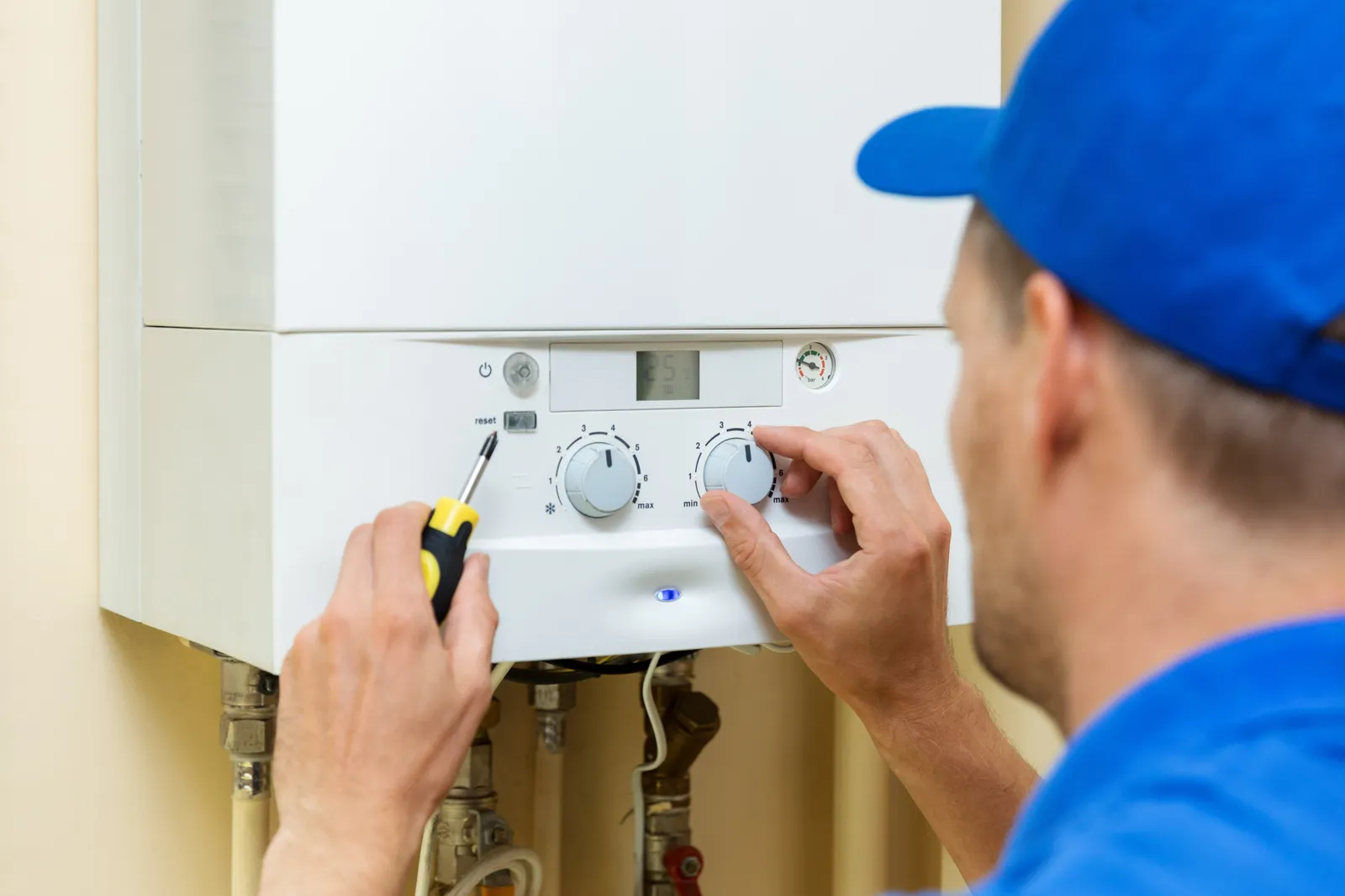
Most modern boilers operate at a system pressure of between 1 and 1.5 bar when cold. The pressure gauge is visible on the boiler's front panel. If pressure drops below 1 bar, the boiler may lock out or perform poorly. If it consistently rises above 2.5 bar, there may be an issue with the expansion vessel. Check it monthly and top up via the filling loop if required — but if you're topping up regularly, there's an underlying leak that needs to be found and fixed.
2. Bleed Your Radiators Annually
Air trapped in radiators prevents them from heating fully — typically showing as a cold patch at the top of the radiator while the bottom is warm. Bleed radiators at the start of each heating season using a radiator key. After bleeding, check and restore system pressure as above. In a larger property with many radiators, systematic annual bleeding makes a meaningful difference to system performance.
3. Keep the Area Around Your Boiler Clear
Boilers need adequate air circulation and clear access to flue outlets. Don't store items against or directly around the boiler, and ensure the flue terminal outside the property is clear of debris, nesting birds, or ivy growth that could restrict exhaust.
4. Test Safety Devices
Your boiler has several safety devices — including a pressure relief valve and a flame failure device. These are tested as part of an annual service, but you should be aware of their location and condition. If your pressure relief valve is dripping or has been discharging, this is a fault that needs professional attention.
5. Inspect External Components Regularly
Visually check pipework, valves, and visible connections around the boiler for signs of corrosion, dampness, or mineral deposits — all of which can indicate a slow leak. Check that the flue outside is intact and hasn't been damaged by weather or impact.
6. Monitor System Water Quality
The water in your heating system should be treated with a corrosion inhibitor and maintained at the correct pH. Over time, inhibitor depletes and the water becomes more corrosive, accelerating the formation of magnetite sludge that damages boilers and restricts flow. Annual water quality testing and inhibitor top-up, as part of a service visit, is one of the most cost-effective maintenance interventions available.
7. Service Your Magnetic Filter
If your system has a magnetic filter — and it should — it needs to be cleaned or replaced annually. A saturated magnetic filter stops working and may even release captured sludge back into the system. This is a quick job but an important one.
8. Don't Ignore Warning Signs
Unusual noises (banging, gurgling, or kettling), fault codes on the display, pilot light issues, inconsistent heating, or repeated pressure drops are all signs that something needs attention. The longer these are ignored, the more likely a minor fault becomes a major one. Act on warning signs promptly.
9. Keep Your Boiler in Use
Boilers that sit completely idle for months — as often happens with holiday homes or investment properties — can develop seized components. Running the boiler briefly every few weeks during summer, and ensuring the pump runs regularly, helps keep components moving and prevents seizure.
10. Have a Professional Annual Service
This is the most important item on this list. An annual boiler service by a Gas Safe registered engineer covers combustion analysis, heat exchanger inspection, flue integrity check, safety device testing, water quality assessment, and a full service record. It identifies problems early, maintains warranty validity, ensures safety compliance, and gives you a documented maintenance history. It is not optional — it is the foundation of responsible boiler ownership.
When to Call a Professional
If you're ever unsure about any aspect of boiler maintenance, call a professional. Gas appliances carry inherent safety risks when worked on incorrectly. The cost of a professional callout is always less than the cost of a fault caused by incorrect DIY intervention — and the safety stakes are too high to cut corners.
Talk to a specialist today.
Our Gas Safe engineers are available same-day across Central and North London. No call-out charge quoted upfront. No obligation.
Related Services