

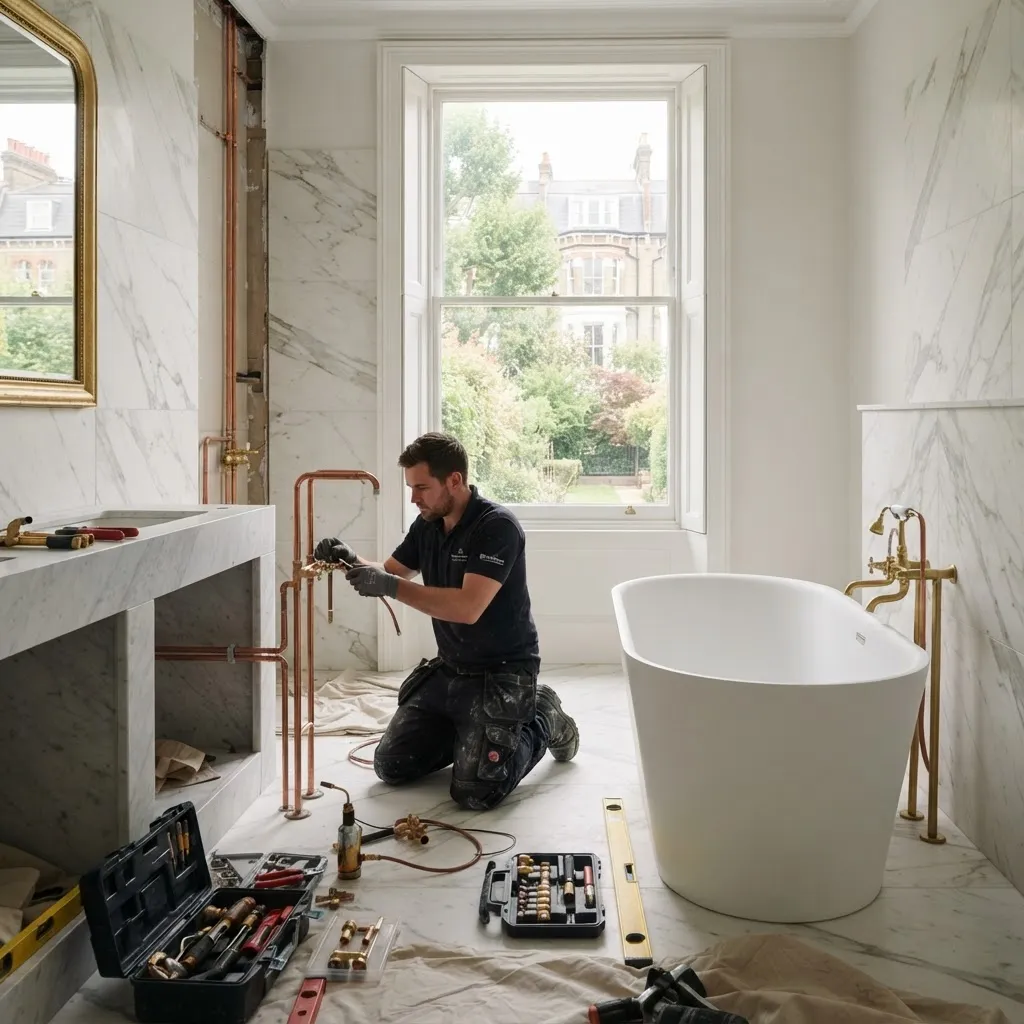
Behind every flawless high-end bathroom is first-fix plumbing done properly. The pressure, pipework and planning decisions that make or break a luxury renovation.
Quick Answer
The success of a luxury bathroom renovation is decided at first fix, before a single tile goes on. The critical plumbing considerations are: water pressure and flow rate (designer showers typically need 3+ bar and 20+ litres per minute), hot water capacity, correctly sized pipework, isolation valves for serviceability, and specifying fittings whose parts remain available. Get these wrong and no amount of marble will hide it.
Why plumbing decides the outcome of a high-end renovation
We're regularly called to beautiful, newly finished London bathrooms that don't work: rain heads that dribble, thermostatic valves that pulse hot and cold, baths that take fifteen minutes to fill. In almost every case the problem was baked in at first fix — and fixing it after tiling means opening up finished walls.
High-end bathroom design magnifies plumbing demands. A body-jet shower can draw 40+ litres per minute; a freestanding tub may hold 300 litres; imported fittings often expect continental pressures. The plumbing must be engineered to the specification, not assumed.
1. Pressure and flow: the numbers that matter
Most designer brassware performs as intended at 3 bar dynamic pressure. Many London homes — especially period conversions on gravity-fed or older mains — deliver far less. Before specifying any fittings:
- Measure dynamic (in-use) pressure and flow, not just static pressure
- Check the incoming main can supply multiple outlets simultaneously
- Where pressure is marginal, plan for a pump set or upgraded main — as part of the design, not a retrofit
If your existing supply is weak, our guide to low water pressure in London explains the usual causes.
2. Hot water capacity and recovery
A luxury bathroom can outrun a combi boiler in seconds. Two showers running together, or one large rain head plus a bath tap, generally demands stored hot water — an unvented cylinder sized to the property's simultaneous demand. We size cylinders on bathroom count, occupancy and fill rates; a 300-litre unvented cylinder is common for a four-bathroom townhouse. Recovery rate matters as much as volume: fast reheat coils and correctly sized boilers keep the second bath as hot as the first.
3. Pipework sizing and routing
Luxury shower systems need 22mm (sometimes 28mm) supplies run as dedicated feeds — not teed off a 15mm run feeding three other outlets. At first fix we also:
- Balance hot and cold pressures at thermostatic valves (unbalanced supplies cause temperature hunting)
- Route pipework to avoid noise transmission through studwork — clipped, sleeved and insulated
- Pressure-test everything before boarding, and photograph pipe routes for the O&M file
4. Serviceability: the consideration everyone forgets
Every concealed valve, pump and cistern must be reachable. That means access panels planned with the designer, isolation valves on every appliance and outlet, and — crucially — specifying brands whose cartridges and spares will still be available in ten years. We maintain fittings from Dornbracht, THG Paris, Lefroy Brooks and Vola across prime London, and the difference between a 30-minute cartridge swap and a wall-opening excavation is entirely down to first-fix decisions. For ongoing care, see our shower, mixer and tap repair service.
5. Waste, falls and wet rooms
Wet rooms and low-profile trays leave minimal tolerance: a linear drain needs the correct fall formed in the floor, adequate waste pipe diameter (usually 50mm for high-flow showers) and an accessible trap. In period London buildings, achieving falls within shallow floor voids often drives the entire bathroom layout — another reason plumbing design must precede interior design, not follow it.
6. Protecting the investment
London's hard water will attack premium brassware and glass from day one. For renovations at this level we strongly recommend a water softener — it protects the finish on fittings, keeps enclosure glass spotless and preserves the thermostatic cartridges that are most vulnerable to scale. Underfloor heating, towel rail circuits and smart controls should be planned into the same first fix.
Sequencing a renovation properly
- Design stage — plumbing engineer reviews fitting specification against measured pressures and hot water capacity
- First fix — pipework, wastes, cylinder upgrades, pressure testing, photographs
- Second fix — brassware, sanitaryware, commissioning and balancing
- Handover — isolation map, spares list and maintenance schedule
Planning a renovation in a listed or period property? Read our guide to heating systems in Grade II listed homes, or talk to our team about plumbing works across prime London.
Preventative Maintenance
Frequently Asked Questions
Most designer brassware performs as intended at around 3 bar dynamic pressure, with high-flow rain heads and body jets needing 20–40+ litres per minute. Always measure dynamic (in-use) pressure before specifying fittings — static pressure readings are misleading.
Talk to a specialist today.
Our Gas Safe engineers are available same-day across Central and North London. No call-out charge quoted upfront. No obligation.