


Quick Answer
Act fast when you find a plumbing defect. Learn the essential steps for effective defect liability period plumbing management to prevent damage.
If you discover a plumbing or heating fault during the defect liability period, isolate the water or gas supply if there’s any risk of damage, then photograph or film the fault, note the exact location and symptoms, and notify your developer or installer and your maintenance contractor immediately. This applies whether the fault is a dripping valve, a cold spot in underfloor heating, or an intermittent noise from a cylinder.
Effective defect liability period plumbing management depends on speed and evidence gathered in the first hours, not the first days.
Before you call anyone, gather three documents if you have them: the Gas Safe certificate, the benchmark commissioning checklist, and proof of manufacturer warranty registration. These prove the system was installed and tested correctly, and most developers or manufacturers will ask for them before authorising a repair.
- Isolate the supply only if there’s active flooding or a suspected gas leak.
- Photograph the fault, the surrounding area, and any visible readings or labels.
- Record the time discovered and exact room or fixture location.
- Notify your contractor and, where relevant, the developer, on the same day.
If you smell gas or see standing water near electrics, leave the area, shut off the supply at the mains if you can do so safely, and call a Gas Safe registered engineer or your emergency contractor without delay.
Key Takeaways
Effective defect liability period plumbing management depends on immediate documentation, insisting on witnessed tests, and having a single retained contractor manage escalation.
| Point | Details |
|---|---|
| Act within hours | Photograph, isolate if necessary, and notify your contractor the same day a fault is found. |
| Keep three documents ready | Gas Safe certificate, commissioning checklist, and warranty registration speed up every claim. |
| Use the golden window | Developers respond fastest before final sign off; act before that milestone passes. |
| Insist on witnessed tests | Pressure tests, thermal imaging, and commissioning checks catch faults finishes would otherwise hide. |
| Rareplumbing as retained contractor | Offers Gas Safe registered engineers, fixed quotes, and two-hour emergency response across Central London. |
What to expect during the plumbing warranty period
Most new or recently completed properties develop plumbing snags within the first twelve months, and the pattern is fairly predictable. Leaks at compression joints, low flow at multi-outlet showers, noisy pipework from unsecured runs, cold spots in underfloor heating loops, and cylinder or boiler commissioning faults account for the bulk of reported issues. These aren’t signs of poor workmanship in isolation, they’re the expected shakedown period for any complex system settling into use.
The period immediately after handover, often called the golden window, is when developers and installers are most responsive. Contractual leverage, retained funds, and reputational pressure all work in the homeowner’s favour before final sign off. Once that milestone passes, responsiveness typically drops, and getting attention for a minor defect becomes harder.
Realistic timings vary by scope, but attendance for an active leak should happen within 24 to 48 hours, and cosmetic or performance snags within one to two weeks. Anything longer without a firm date warrants escalation.
Three documents matter more than most owners realise:
- The benchmark commissioning checklist, which proves the system was balanced and tested at handover.
- The Gas Safe certificate, required for any gas appliance to be legally connected and warranted.
- Manufacturer warranty registration, without which a boiler or cylinder warranty may simply not apply.
Plumbing and heating systems remain among the most commonly snagged items in new builds, which is exactly why these three records need to be requested at handover rather than chased months later.
How to manage a defect claim from discovery to repair
A defect claim moves faster and gets resolved better when it follows a consistent sequence rather than an improvised phone call. Estate managers handling multiple properties benefit most from treating this as a repeatable process rather than a one-off response.
- Contain the problem. Isolate the water or gas supply only if necessary, and use towels or a wet vacuum to limit water spread across finishes.
- Document immediately. Photograph the fault from multiple angles, film any active leak or unusual noise, and record the exact time and location.
- Write a structured defect report. Include the property address, the affected system, symptoms in plain language, when it was first noticed, and any prior related repairs.
- Send it to the right people. Copy the developer or installer, the manufacturer if the warranty is product-specific, and your maintenance contractor, all on the same day.
- Request a witnessed inspection. Ask for pressure or commissioning tests to be re-run in your presence, and request thermal imaging or electronic leak detection where the fault is behind a wall or floor.
- Supervise the repair. Insist on drop cloths, shoe covers, and protected access routes before anyone touches finished surfaces.
- Get a written quote and timescale. A fixed price agreed before work starts avoids disputes later.
- Verify the fix. Witness the post-repair test yourself, or request a second inspection, and keep every record from start to finish.
Pro Tip: Keep a single folder, digital or physical, for every property with dated photos, test readings, and correspondence. When a dispute over warranty coverage arises months later, that folder is the difference between a quick resolution and a drawn-out argument.
Detailed documentation, including photographs, video, and dated test readings, materially improves both the speed and quality of repairs when developers or manufacturers are asked to act.
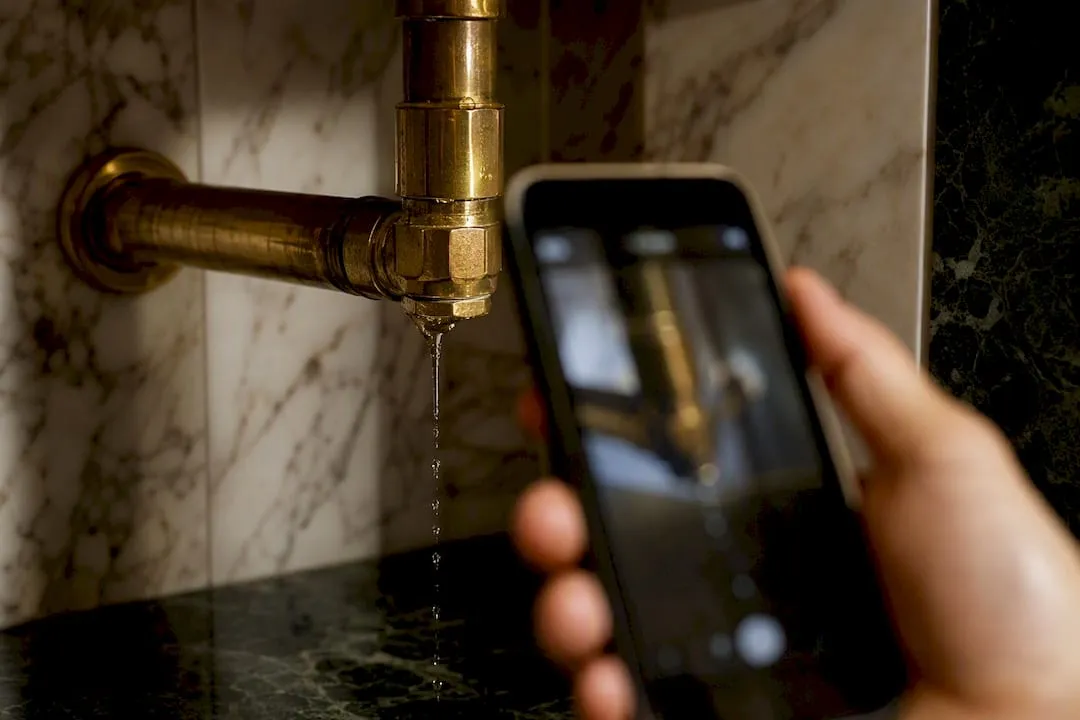
Which inspection tests and documents should you insist on?
Not every defect is visible, and the ones you can’t see are the ones that cause the most expensive damage. Insisting on specific tests, witnessed and recorded, is the single most effective safeguard for high-value finishes.
- Pressure testing before tiling or wall closure. Gauge readings should be witnessed and photographed at both the start and end of the hold period, since a leak found before finishes go up costs a fraction of one found after.
- Full system commissioning checks. This covers system balance, multi-outlet hot water performance, and correct flue and condensate routing on boilers.
- Electronic leak detection and thermal imaging. These are the right tools for concealed pipework behind plasterboard, under screed, or beneath tiled floors.
- Gas Safe certification and manufacturer registration. Without these, a warranty claim can be refused outright, regardless of how clear the fault is.
Independent snagging inspections that include thermal imaging and detailed reporting tend to carry more weight with developers than a verbal complaint, because they give leverage that’s hard to dismiss.
What should a premium maintenance plan include?
A maintenance plan built for a high-value property needs to do more than schedule an annual boiler service. It should actively reduce the chance that a small fault becomes an expensive one.
- Scheduled inspections with a clear, written scope covering preventive checks, not just breakdown response.
- Parts and labour guarantees stated in writing, not implied verbally.
- A guaranteed emergency response window, ideally measured in hours rather than “same day if possible.”
- A clear escalation path: developer or installer for warranty-period faults, manufacturer for product-specific issues, and your retained contractor for anything requiring immediate action.
A fast response, such as a two-hour attendance window, matters because water damage compounds by the hour. A dripping joint left overnight can mean replacing a ceiling rather than tightening a fitting. Scheduled inspections and prompt leak detection reduce both interior damage and long-term costs, and they’re also the right moment to review smart leak sensors and whole-house flow monitoring for properties with a lot at stake.
Pro Tip: Ask any prospective maintenance contractor to put their emergency response time in writing, with a defined penalty or remedy if they miss it. A verbal promise of “quick response” means nothing in a dispute.
How Rareplumbing manages defects for high-end properties
Rareplumbing works with luxury homeowners and estate managers across Central London, and defect liability period plumbing management sits at the centre of that work. Every engineer is Gas Safe registered, every job carries a fixed quote agreed before work starts, and emergency attendance is guaranteed within two hours.
In practice, that means faults get documented with photographs and dated test readings, interiors are protected during any repair with drop cloths and careful containment, and clients receive post-repair certificates and reports for their records. That documentation matters as much for warranty claims as for the repair itself.
- Gas Safe registered engineers for every certified job.
- Two-hour emergency response for active leaks or heating failures.
- Fixed quotes before any work begins, no unexpected costs.
- Post-repair certificates and reports supplied as standard.
What estate managers should prioritise with any contractor
Three things separate a smooth defect resolution from a drawn-out one: how fast the leak or fault is contained, how well it’s documented, and whether there’s a single point of contact managing the conversation. Split those responsibilities across too many people and details get lost, and delays follow.
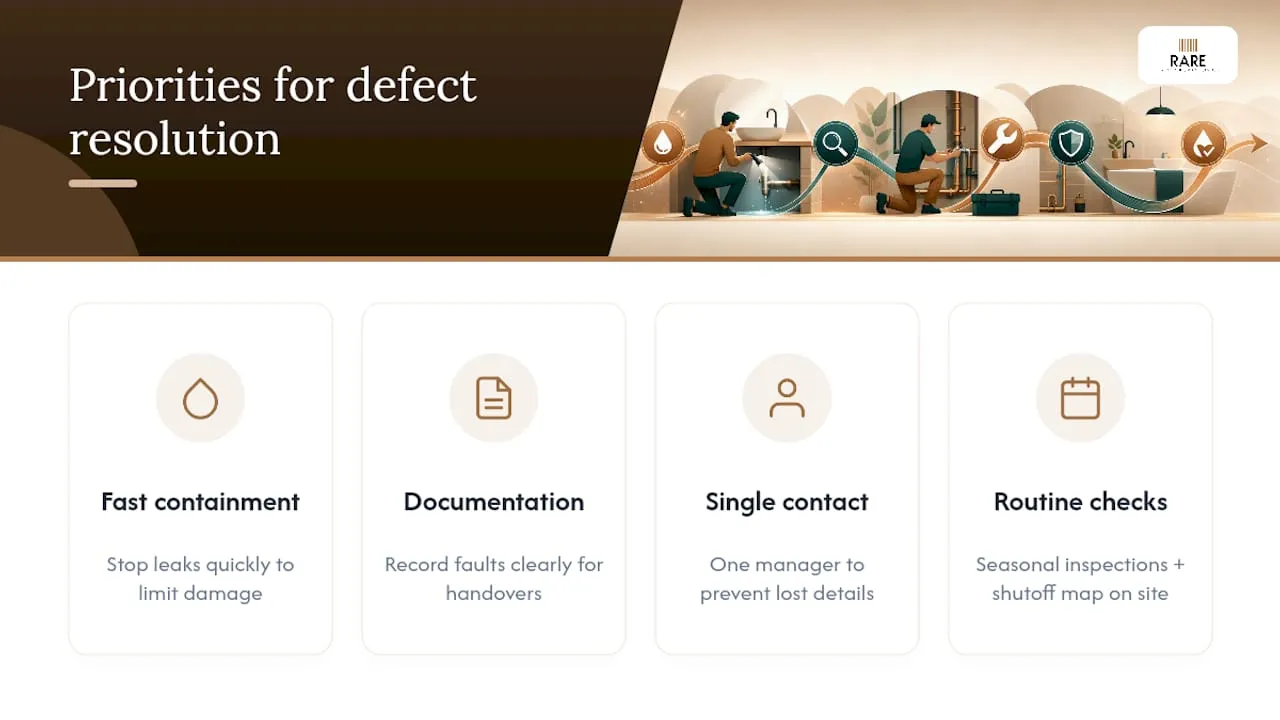
Beyond reacting to faults, build in routine seasonal checks and keep a simple shutoff map for every property, so anyone on site knows exactly where to stop water or gas without hunting for valves in a crisis.
Get a retained contractor who protects your finishes and your time
Rareplumbing offers exactly what this article has argued for: Gas Safe registered engineers, fixed quotes agreed before work starts, and a two-hour emergency response across Central London. For luxury homeowners and estate managers juggling multiple properties, that combination removes the guesswork of chasing developers or piecing together ad hoc tradespeople during a warranty dispute.
Whether you need a single defect resolved under warranty or a retained contractor for ongoing maintenance, Rareplumbing’s plumbing repair service is built around documented, protected, and verified repairs, not rushed fixes that reappear six months later. If you’re managing a property currently inside its defect liability period, get in touch for a fixed quote and put a maintenance plan in place before the golden window closes.
Sources
- Plumbing and heating snagging in new build homes
- How to check plumbing in a new house: the 2026 buyer’s snagging guide
- Why regular plumbing inspections matter for luxury homes
FAQ
How long does the plumbing defect liability period usually last?
Most defect liability periods for plumbing and heating systems run for twelve months from handover, though some manufacturer warranties on boilers or cylinders extend well beyond that.
What documents should I request before the developer leaves the site?
Ask for the Gas Safe certificate, the benchmark commissioning checklist, and proof of manufacturer warranty registration, since all three are usually required before a warranty claim can proceed.
What’s the fastest way to get a defect fixed under warranty?
Report it in writing with photographs, the exact location, and symptoms on the day you find it, and send it to the developer, manufacturer, and your maintenance contractor simultaneously.
Does Rareplumbing handle defect liability period repairs?
Yes, Rareplumbing manages defect resolution and ongoing maintenance for luxury properties across Central London, with Gas Safe registered engineers and a two-hour emergency response.
Should I request a witnessed pressure test after a repair?
Yes, a witnessed post-repair test, with readings photographed at start and finish, confirms the fault is genuinely resolved before finishes are closed up again.
Recommended
Talk to a specialist today.
Our Gas Safe engineers are available same-day across Central and North London. No call-out charge quoted upfront. No obligation.
Related Services