Quick Answer
Discover why your hot water runs cold quickly and learn easy troubleshooting steps to fix it before calling an engineer.
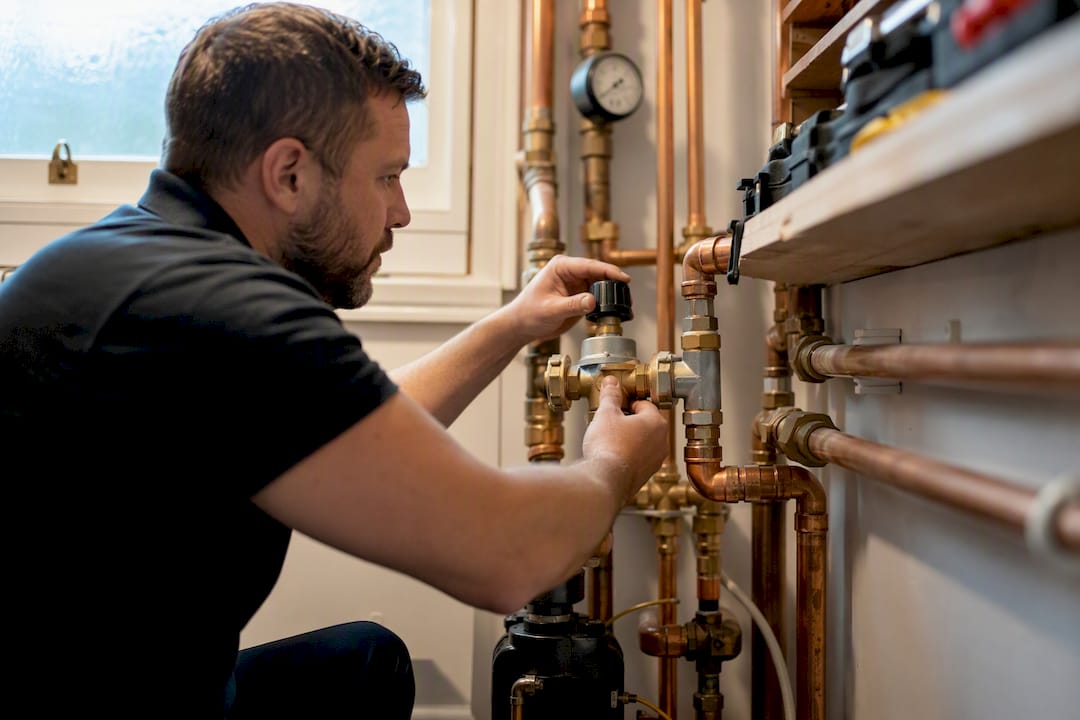
Rapid cooling almost always comes down to one of two things: the boiler or cylinder is losing hot-water flow, or it has a switching or heat-transfer fault. In combi boilers, that usually means a diverter valve, a blocked plate heat exchanger, or a pressure problem triggering the boiler’s own safety cut-out. Before booking an engineer, run three quick checks to diagnose issues with your heating system by following these pool heater troubleshooting steps.
- Try a different hot outlet. If only one tap or shower runs cold, the fault is local, not system-wide.
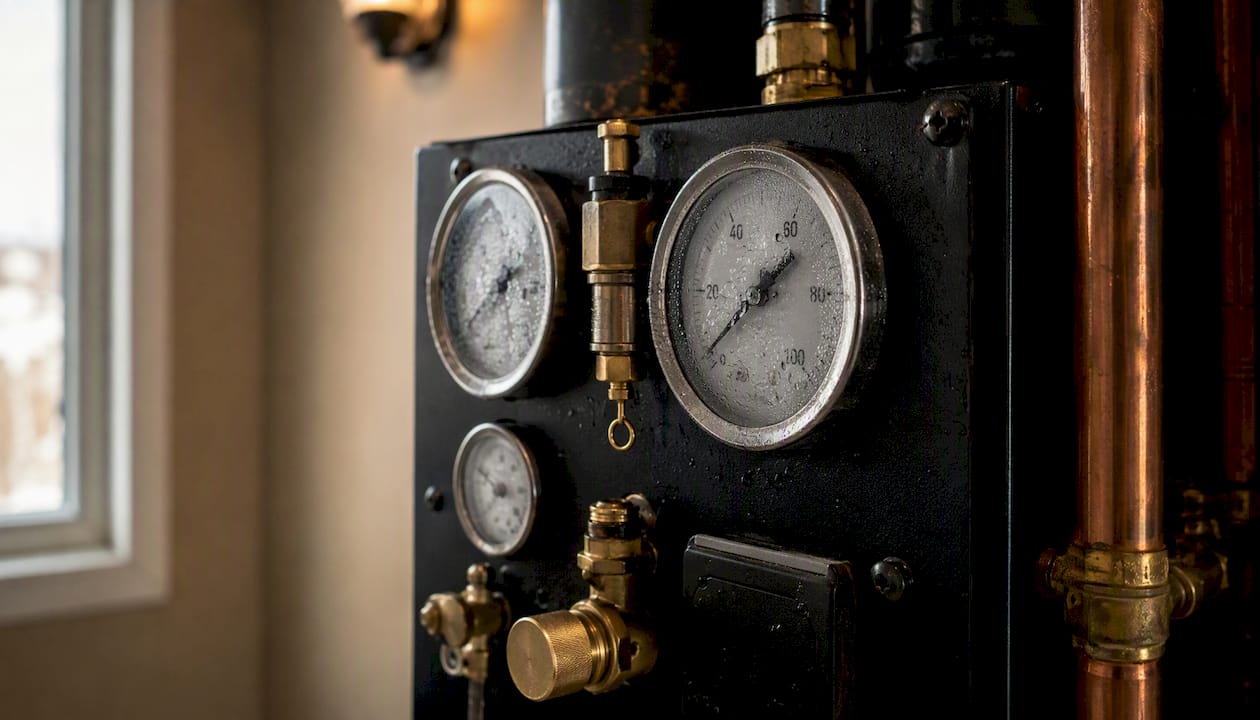
- Check the boiler pressure gauge. Most combi boilers need a reading between 1 and 2 bar when cold; anything lower can starve the system of flow.
- Run a 30-second bucket test. Fill a bucket from the hot tap at full flow for 30 seconds and judge whether the flow is strong and steady or weak and pulsing.
If the problem shows up across the whole house, or these checks don’t explain what you’re seeing, the fuller diagnosis checklist below will narrow things down before you call a Gas Safe registered engineer.
Key Takeaways
Hot water that runs cold quickly is almost always a flow, pressure, or heat-transfer fault rather than total boiler failure, and the right fix depends entirely on correctly matching the symptom pattern to its cause.
| Point | Details |
|---|---|
| Run the three quick checks first | Test another outlet, check boiler pressure, and run a 30-second bucket test before booking anyone. |
| Match the pattern to the cause | Sudden cut-outs suggest a valve or sensor fault; gradual cooling suggests capacity or sediment. |
| Know your system type | Combi boilers, cylinders, and tankless heaters each fail differently and need different first checks. |
| Stop at safety red flags | A gas smell, repeated lockouts, or collapsing pressure need a Gas Safe engineer immediately, not a DIY fix. |
| Rareplumbing diagnoses before quoting | Gas Safe registered engineers with fixed pricing and a 2-hour emergency response across Central London. |
Why hot water runs cold quickly: the eight most common causes
Hot water going cold mid-shower is rarely one single fault. It’s usually one of a short list of mechanical or electronic failures, and most leave a distinct symptom pattern you can read like a diagnosis.
-
Diverter valve failure (combi boilers). The diverter valve switches the boiler between central heating and hot water. When it sticks or wears out, hot water cuts off mid-use even though the radiators stay warm. This is one of the most overlooked single points of failure in a combi system, and it typically needs a straight repair or replacement rather than a workaround.
-
Blocked or scaled plate heat exchanger. This narrow-passage component is where the boiler transfers heat into your water, and it’s highly vulnerable to limescale and central-heating sludge. A restricted exchanger causes local overheating, which trips the boiler’s safety cut-out and drops your hot water to cold. A chemical clean often restores performance in hard-water areas; in severe cases the exchanger needs replacing outright.
-
Low mains or system pressure. Weak pressure restricts flow and can trigger nuisance cut-outs. A temporary top-up via the filling loop may resolve it, but pressure that keeps dropping points to a leak, a faulty valve, or radiators that need bleeding, not a one-off top-up.
-
Faulty flow sensors or thermistors. These sensors tell the boiler how hard to work. When they misread the flow or temperature, the boiler under- or over-modulates, producing intermittent swings between hot and cold rather than one clean failure. This is a common reason hot water seems to fluctuate for no obvious reason.
-
Undersized boiler or cylinder for current demand. A property upgraded with high-flow showers or extra bathrooms can outgrow the original system even though every component still technically works. Running two showers at once, or a bath and a shower together, is the classic way to expose this shortfall.
-
Dip tube or immersion element failure (cylinders). A cracked dip tube lets cold water mix straight into the hot outlet, and a failed immersion element simply stops heating. Both produce lukewarm rather than properly hot water from the start.
-
Sediment or sludge in the cylinder. Magnetite and scale settle at the base of a cylinder over years, effectively shrinking its usable hot-water volume. A 200-litre cylinder can behave like a much smaller one once sediment builds up, which is why professional cleaning or tank cleaning services sometimes restore capacity that a homeowner assumed was simply “gone.”
-
Thermostat, programmer, or mixing valve settings. A thermostatic mixing valve set too conservatively, or a programmer running on the wrong schedule, can deliver water that feels cold even when the boiler is heating correctly.
Pro Tip: Note whether the water goes cold gradually or drops suddenly. A gradual cool-down over several minutes usually points to capacity or sediment; a sudden cut from hot to stone cold usually points to a valve or sensor fault.
Recovery times and costs vary by cause. A diverter valve repair or sensor replacement is often a same-day job. A chemical clean of a heat exchanger typically takes a few hours, while a full cylinder clean or exchanger replacement can take longer and cost more, depending on access and the extent of the sediment.
How your system type changes the likely cause
The system behind your taps determines which faults are worth checking first, so it helps to know what you’re actually working with before you start troubleshooting.
- Combi boilers heat water on demand with no storage tank, so a diverter valve fault, a clogged plate heat exchanger, or a flow sensor problem is the most likely explanation. If radiators heat normally but hot water cuts out, suspect the valve first; if hot water fluctuates rather than cutting out cleanly, suspect the sensor.
- Unvented or indirect cylinders store hot water, so the cause is more likely to sit with the cylinder’s capacity, its immersion heater, its coil, or a mixing valve letting cold water dilute the output. Recovery time between uses matters here: a cylinder that’s undersized for the household will run out faster than it can reheat, especially during morning peak demand.
- Tankless or on-demand systems heat water only as it flows, which makes them sensitive to inlet temperature and minimum flow thresholds. A drop in incoming mains temperature, or flow that dips below the unit’s minimum trigger rate, can cause water to run cold within seconds rather than minutes.
Not sure which you have? A combi boiler typically has no separate hot water cylinder anywhere in the property, while a cylinder system will have a tank, usually in an airing cupboard or loft.
A step-by-step check to narrow down the cause
Work through these in order before calling anyone. Each step either rules something out or points you toward the likely fault.
- Establish scope. Is every hot tap affected, or just one? A single affected outlet points to a local blockage or a faulty mixer; a whole-house issue points to the boiler or cylinder itself.
- Run the bucket test. Full-flow hot water into a bucket for 30 seconds tells you whether you’re dealing with a flow restriction or a heat problem. Roughly 15 litres in that time is a reasonable target for a healthy combi; noticeably less suggests restricted flow.
- Check and log boiler pressure. Note the reading before you run any hot water and again afterwards. A pressure that collapses during use, or an error code that appears on the display, is valuable information for whoever diagnoses it next.
- Watch the pattern. Hot, then suddenly cold, then hot again usually points to a valve or sensor fault cycling on and off. A slow, progressive cool-down over several minutes usually points to capacity or sediment limiting how much hot water is actually available.
- Write down anything that changed recently. A new shower head, bled radiators, or recent building work can all coincide with the fault starting, and that timeline is often the fastest route to the actual cause.
Safe steps you can try before booking a repair
A handful of low-risk steps often fix simple causes outright, or at least give an engineer a clearer picture when you do call.
- Reset the boiler. Follow the manufacturer’s reset procedure and watch it through two or three full on/off cycles, noting whether the fault recurs at the same point each time.
- Top up the pressure via the filling loop, following your boiler’s manual exactly, and stop the moment the gauge reaches the recommended range. If pressure keeps dropping afterwards, that’s a leak, not a one-off fix. Our guide on boiler losing pressure covers this in more detail.
- Clean shower heads and tap aerators. Limescale build-up in these fittings can mimic a system-wide flow problem when it’s really a local blockage.
- Reduce simultaneous demand. Turn off other hot taps and showers, then test again. If the fault disappears, capacity is the likely culprit, not a broken component.
Pro Tip: If a specific mixer shower is the only affected outlet, isolate it and test another outlet on the same system. That single comparison usually tells you within minutes whether you need a plumber for the mixer or an engineer for the boiler, and our shower mixer tap repair service covers the former.
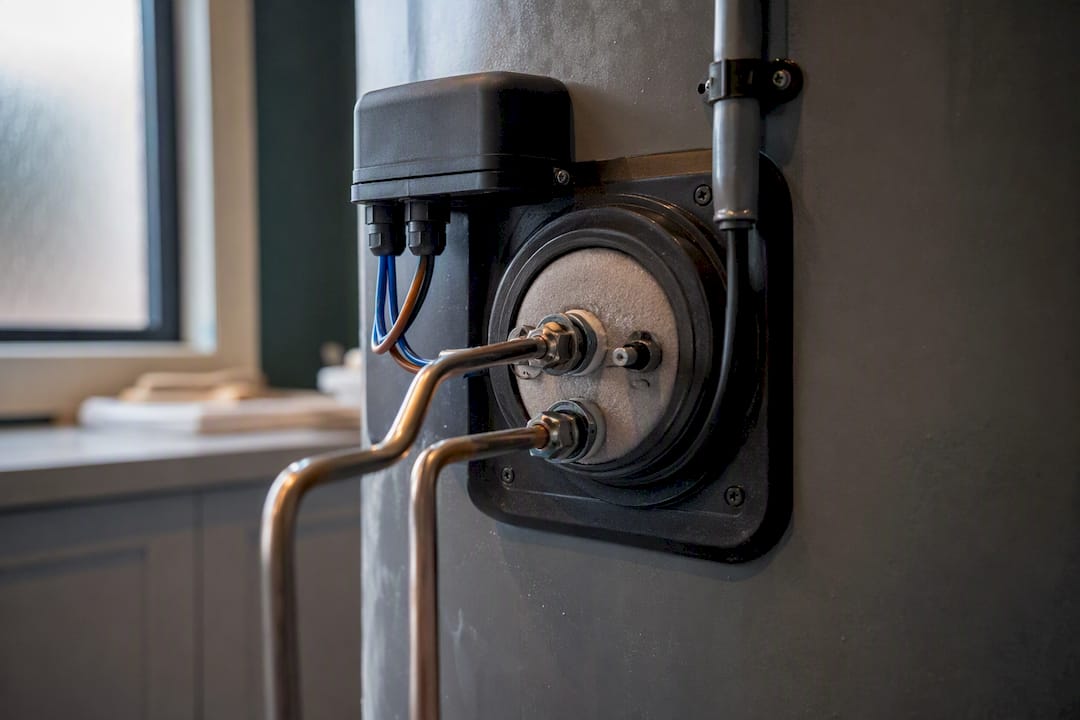
Never open the boiler casing, attempt to replace gas components, or touch the electrical parts of an immersion heater yourself. These jobs are restricted to Gas Safe registered engineers and qualified electricians for good reason.
When a fault stops being a DIY job
Some symptoms mean stop troubleshooting and call a professional immediately.
- Any smell of gas, a pilot light that won’t stay lit, or visible leaks around the boiler or cylinder.
- Repeated lockouts that recur every time you reset the boiler.
- Pressure that collapses within minutes of topping it up, which almost always signals a leak somewhere in the system.
A genuine Gas Safe registered engineer carries an ID card confirming their registration number and the specific work categories they’re qualified for, and will show it on request. Ballpark costs vary by cause: a diverter valve repair or sensor replacement tends to sit at the lower end, a chemical clean of a heat exchanger is a mid-range job, and full exchanger or cylinder replacement costs more, depending on access and parts. Before the visit, note your system type, when the fault started, and anything recent that changed.
RARE’s approach to diagnosing hot water faults
Rareplumbing has spent over 25 years working across Central London’s high-end residential and commercial properties, with a fully Gas Safe registered team and a 2-hour emergency response commitment for exactly these situations.
- Fixed quotes are agreed before any work begins, so there’s no ambiguity once a fault is confirmed.
- The diagnostic sequence runs from symptom observation, to pressure and flow measurement, to targeted inspection of the diverter valve and heat exchanger, minimising invasive testing until it’s genuinely needed.
Most “broken boiler” call-outs turn out to be a boiler correctly protecting itself from overheating or a pressure fault, not a component failure. Getting that distinction right first avoids paying to replace parts that were never actually broken.
What homeowners consistently get wrong here
The instinct when hot water runs cold is to assume the boiler has failed outright, and that’s usually the wrong starting point. Boilers are built to protect themselves. A cut-out mid-shower is frequently the system doing exactly what it’s designed to do when it detects overheating or a pressure anomaly, not evidence of a broken unit needing replacement.
The bigger gap in conventional advice is how little attention capacity gets. Homeowners fixate on parts, valves, sensors, exchangers, when the honest answer in a lot of upgraded London properties is that the system was never sized for the showers now running through it. You can replace every failing component and still get short hot water runs if three bathrooms are drawing from a cylinder specified for one.
My advice: run the scope and pattern checks first, because they cost nothing and rule out entire categories of fault in minutes. Only escalate to pressure logs and engineer call-outs once you have a genuine reason to suspect something mechanical rather than behavioural. Most people call an engineer too early, armed with no information, which makes the visit longer and the diagnosis slower than it needs to be.
— Paresh
Book a Gas Safe engineer who diagnoses before quoting
If your own checks point to a mechanical fault rather than a demand or behaviour issue, Rareplumbing offers Gas Safe registered diagnosis and repair across Central London with a 2-hour emergency response and a fixed quote agreed before any work starts, so there’s no surprise invoice once the diverter valve or heat exchanger is confirmed as the cause. That fixed-price approach matters most on exactly the faults covered here, where a “repair or replace” call can otherwise swing the final bill significantly. For high-value properties where a hot water fault has knock-on effects across multiple bathrooms, Rareplumbing’s plumbing repairs service covers everything from valve replacement to full system upgrades where capacity, not a single part, turns out to be the real issue. If your cylinder is showing signs of sediment build-up or reduced capacity, it’s worth reviewing case studies like the power flush carried out in Primrose Hill before deciding between a clean and a replacement. Get in touch to arrange an inspection and a fixed quote before any work begins.
Sources
- Combi Boiler Hot Water Goes Cold: Causes & Fixes | PlusHeat UK
- My Combi Boiler Hot Water Turn Cold After a Few Minutes | Boilers2Go
- Hot water runs cold after a few minutes combi boiler | Heatable
- Tankless water heating — Wikipedia
FAQ
Why is my hot water getting cold so quickly?
The most common causes are a failing diverter valve, a blocked or scaled plate heat exchanger, low system pressure, or a faulty flow sensor, all of which can trigger the boiler’s own protective cut-out.
Why does my hot water keep going cold then hot again?
This cycling pattern usually points to a diverter valve or flow sensor fault causing the boiler to switch or modulate incorrectly, rather than a total heating failure.
How do you fix a slow running hot water tap?
Start by cleaning the tap aerator and shower head to rule out local limescale blockage, then run a bucket test on that outlet alone to see if the flow rate improves elsewhere in the house.
Why is my hot water not staying hot for a long time?
This is typically a capacity issue, either an undersized boiler or cylinder for current demand, or sediment build-up reducing the cylinder’s usable hot-water volume, and a Gas Safe engineer like Rareplumbing can confirm which applies to your system.
Recommended
Talk to a specialist today.
Our Gas Safe engineers are available same-day across Central and North London. No call-out charge quoted upfront. No obligation.
Related Services