
Quick Answer
Discover the role of zone heating controls in UK homes! Optimize comfort, reduce gas bills, and meet energy regulations effectively.
TL;DR:
- Zone heating controls enable independent temperature management of different property areas, reducing energy waste.
- Legislation mandates at least two controlled zones in new large homes and requires zone controls for boiler replacements.
Zone heating controls are defined as devices that allow independent temperature regulation of separate areas within a property, letting you heat only the rooms you actually use. The industry term for this approach is “zoned heating,” and it sits at the heart of modern UK heating strategy. UK Building Regulations Part L now mandates two independently controlled zones for new homes over 150m², separating living and sleeping areas. The role of zone heating controls goes well beyond comfort. Properly designed systems cut gas bills, satisfy Boiler Plus legislation, and support the UK’s net-zero targets.
How do zone heating controls work in modern homes?
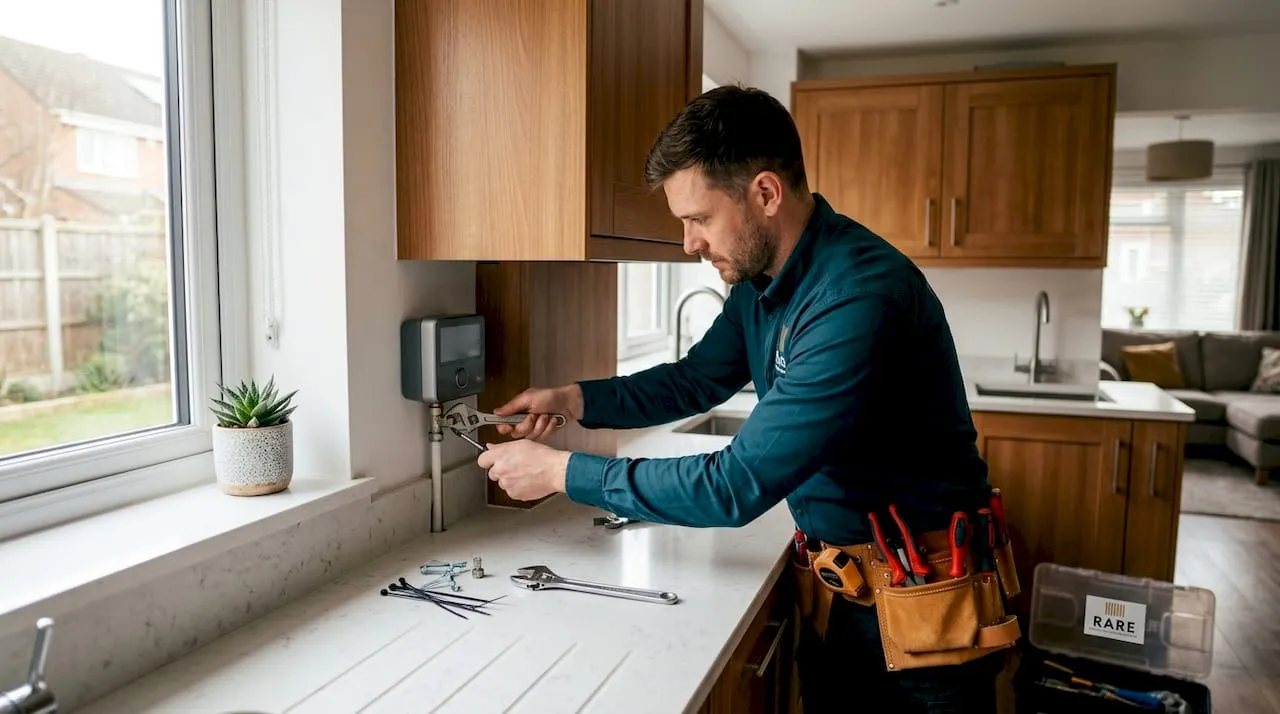
Zone heating control systems divide a property into distinct heating areas, each managed by its own thermostat or controller. The boiler responds only to zones that call for heat, rather than running at full capacity for the entire property. That targeted approach is what delivers the energy savings of 20–30% that smart zoning systems achieve over single-zone timer controls.
The key components
Three components form the backbone of any zoned system:
- Motorised zone valves sit after the boiler and open or close to direct hot water only to zones calling for heat. Most modern combi boilers are compatible without extra wiring centres, though older system boilers may need dedicated control panels.
- Thermostatic radiator valves (TRVs) regulate flow at each radiator. Smart TRVs add wireless connectivity, allowing room-by-room scheduling from a smartphone app.
- Wiring centres manage boiler interlock and pump overrun logic. Relying solely on consumer-grade smart home hubs for this function risks equipment failure and can void warranties.
Zoning strategies for UK properties
A two-zone setup, separating living areas from bedrooms, suits most three-bedroom homes. Larger properties benefit from floor-by-floor zoning or dedicated zones for home offices and annexes. Modern smart systems assign software roles to wireless receivers, enabling flexible zone reconfiguration without physical rewiring. That flexibility matters when you repurpose rooms or extend your property.
Pro Tip: When planning zones, treat each floor as a minimum unit. Mixing ground-floor and first-floor rooms in a single zone undermines the efficiency gains because occupancy patterns rarely align across floors.
What are the costs, savings, and payback period?
A two-zone system in a typical UK home costs £800 to £1,500 to install, including valves, thermostats, and labour. A three-zone setup adds roughly £400 to £600 on top of that, depending on pipework complexity and whether the boiler needs a wiring upgrade.
Expected savings
| Measure | Estimated annual saving | Notes |
|---|---|---|
| Full heating controls with TRVs | Around £75 per year | Energy Saving Trust baseline figure |
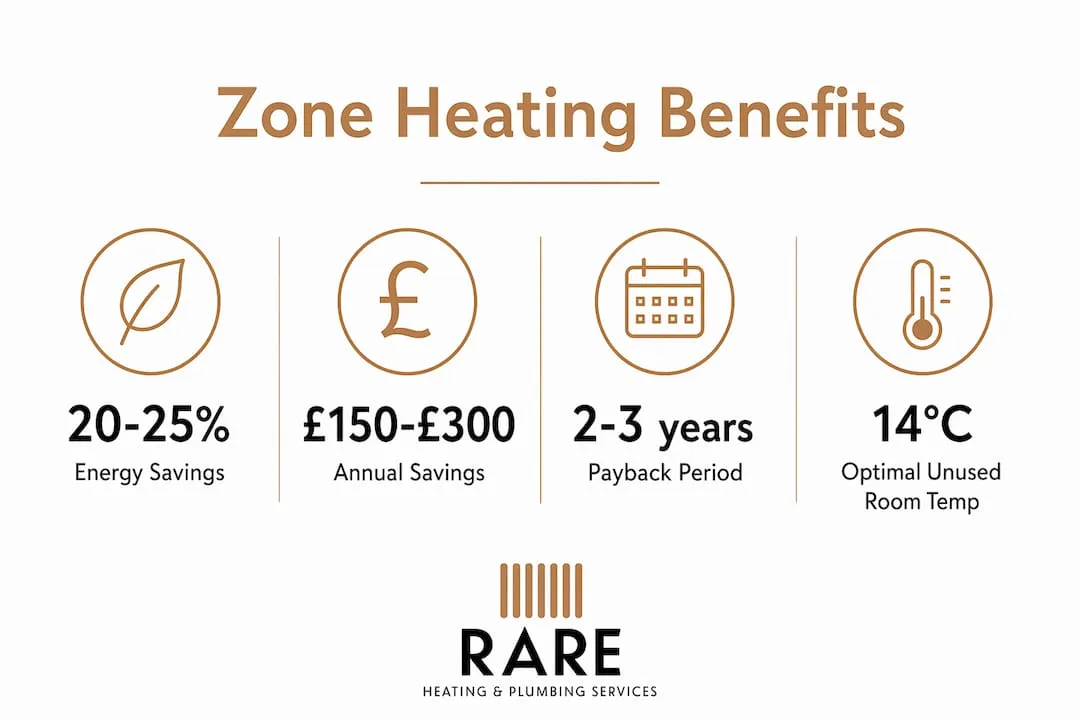
| Two-zone smart system | £150–£300 per year | Based on a three-bedroom home |
| Gas bill reduction | 20–25% | Proper zoning with scheduling |
| Payback period | 2–5 years | Varies by home size and occupancy |
The Energy Saving Trust confirms that multi-zone smart systems increase savings to 10–20% beyond basic TRV installations, depending on usage patterns. Savings vary by insulation quality and how consistently you use scheduling features.
Home size and occupancy patterns are the two biggest variables. A family with predictable routines extracts more value from scheduled zoning than a household with irregular hours. For the latter, occupancy-based heating controls that respond to presence sensors rather than fixed schedules deliver better results.
Pro Tip: Request a heat loss calculation before specifying your zone layout. Undersized zones waste money on repeated short cycling; oversized zones overheat rooms and negate the savings.
What regulatory standards govern zone heating controls in UK homes?
UK regulations set a clear floor for what any new or replacement heating system must include. Compliance is not optional, and non-compliant installations affect your EPC rating and can complicate property sales.
The key standards are:
- UK Building Regulations Part L requires new homes over 150m² to have at least two independently controlled heating zones, with time and temperature controls in each. Flow temperatures are often capped at 55°C via smart TRVs to meet net-zero targets.
- Boiler Plus legislation requires all gas boiler replacements to include time and temperature zone controls. Boilers must also meet 92% ErP seasonal efficiency. Additional measures such as smart thermostats or load compensation are required alongside zoning.
- Gas Safe registration is mandatory for any engineer working on gas-connected heating systems. Zone valve wiring additionally requires NICEIC, NAPIT, or competent person certification to maintain warranty and safety standards.
- MCS certification and TrustMark registration apply to installers adding zone valves, particularly in renewable heating contexts.
- EPC improvements follow from compliant zoning upgrades. A property moving from a single-zone timer to a two-zone smart system typically gains one EPC band, which directly affects rental yields and resale value.
Best practice goes beyond the legal minimum. Commission a full system balance after installation, verify that each zone valve opens and closes correctly under load, and document the setup for future engineers.
How do zone controls improve comfort and efficiency in daily use?
The practical benefits of zone heating control systems show up quickly in daily life. You stop paying to heat empty rooms, and you stop waking up to a bedroom that is either too warm or too cold.
Heating only what you use
Heating only occupied areas is the single biggest driver of cost reduction. A living room zone can run at 21°C during the evening while bedrooms sit at 16°C, then switch automatically at bedtime. That temperature differential, maintained consistently, accounts for the bulk of the 20–25% gas bill reduction seen in properly zoned homes.
Avoiding damp in unused rooms
Turning a room’s heating completely off is a common mistake. Maintaining a setback temperature of around 14°C in unused rooms prevents condensation, thermal bridging, and mould growth. This is especially relevant in older London properties where solid walls are more susceptible to damp.
Smart scheduling and remote control
A numbered approach to daily scheduling works well for most households:
- Set the living zone to reach target temperature 30 minutes before you wake.
- Drop the living zone to setback while the household is at work or school.
- Bring the living zone back up 30 minutes before you return home.
- Switch bedrooms to their target temperature one hour before sleep.
- Drop all zones to setback overnight, but never below 14°C.
Smart TRVs allow remote control via smartphone apps, so you can adjust any zone from anywhere. That granularity goes well beyond what a single manual thermostat can achieve.
What are common myths about zone heating and heat pumps?
The most persistent myth is that zoning reduces heat pump efficiency. The reality is the opposite when the system is designed correctly.
“Zoning isn’t a compromise for heat pump efficiency. Properly designed zoning with TRVs balances temperature, reduces unnecessary high flow temperatures, and boosts overall system performance.”
BEAMA and University of Salford Energy House research confirms that TRVs alongside zoning reduce space heating energy consumption by 6–8% without harming heat pump coefficient of performance (COP). The key is correct system sizing and balancing, not the absence of zones.
Other common misconceptions include:
- “Smart TRVs cause short cycling.” Short cycling results from oversized boilers or poor system balance, not from TRVs themselves. Correctly sized emitters eliminate the problem.
- “Mixed emitter systems cannot be zoned.” Underfloor heating and radiators can coexist in separate zones with appropriate flow temperature controls for each circuit. Rareplumbing’s Heatmiser underfloor heating installations routinely combine both emitter types in zoned configurations.
- “All smart thermostats work together.” Interoperability between manufacturers is inconsistent. Specify a single-manufacturer ecosystem or confirm compatibility before purchasing.
- “Zoning is only for large homes.” A two-zone setup delivers measurable savings in a two-bedroom flat, particularly where one occupant works from home and the other does not.
For properties considering a boiler replacement, zoning must be factored into the specification from the outset, not retrofitted as an afterthought.
Key takeaways
Zone heating controls deliver measurable energy savings, regulatory compliance, and improved daily comfort when correctly specified, installed, and commissioned.
| Point | Details |
|---|---|
| Regulatory compliance | Boiler Plus and Part L require time and temperature zone controls in all new and replacement systems. |
| Installation cost | A two-zone system costs £800–£1,500, with a typical payback of 2–5 years through gas bill reductions. |
| Energy savings | Properly zoned smart systems reduce gas bills by 20–25% compared to single-zone timer controls. |
| Setback temperature | Never turn unused rooms fully off. Maintain around 14°C to prevent damp and condensation. |
| Heat pump compatibility | TRVs with zoning reduce space heating energy by 6–8% without reducing heat pump COP when sized correctly. |
Zone heating in practice: what 25 years of installations have taught me
Homeowners often ask me whether zone heating is worth the upfront cost. My honest answer is that the question is slightly wrong. The better question is whether you can afford not to zone, given that Boiler Plus now makes it a legal requirement for any boiler replacement anyway.
What I have seen repeatedly is that the savings projections are real, but only when the system is commissioned properly. A zone valve that sticks open, or a TRV that is set and forgotten, wipes out the efficiency gains within weeks. The hardware is only as good as the setup behind it.
I also think the comfort argument is underrated. Clients who move from a single thermostat to a properly zoned system consistently report that the house feels different, not just cheaper to run. Bedrooms stay cooler at night, living areas warm up faster in the evening, and the boiler runs shorter, more efficient cycles.
The regulatory direction is clear. The UK is moving toward tighter controls on heating efficiency, and zoning sits at the centre of that shift. Properties with well-designed zone controls will be easier to sell, easier to let, and cheaper to run as energy prices remain volatile. Getting it right now, with a Gas Safe registered engineer who understands system balance, is the most practical step any property owner can take.
— Paresh
Rareplumbing’s zone heating installation service
Rareplumbing installs and commissions zone heating control systems across Central London, working with Gas Safe registered engineers who understand both the technical and regulatory requirements. Every installation begins with a fixed quote, so you know the full cost before any work starts.
Whether you need a two-zone upgrade on an existing system or a full multi-zone design for a new build or renovation, Rareplumbing’s team covers smart heating controls, underfloor heating integration, and boiler compatibility checks. For larger properties or commercial spaces, the commercial heating and plumbing service covers multi-zone design at scale. Contact Rareplumbing for a no-obligation consultation and a fixed quote tailored to your property.
FAQ
What is the role of zone heating controls?
Zone heating controls allow independent temperature regulation of separate areas within a property, so you heat only occupied rooms. This reduces energy waste and improves comfort compared to a single-thermostat system.
Are zone heating controls required by UK law?
Boiler Plus legislation requires time and temperature zone controls on all gas boiler replacements. UK Building Regulations Part L additionally requires at least two independently controlled zones in new homes over 150m².
How much can I save with a zoned heating system?
A properly zoned system in a three-bedroom home typically reduces gas bills by 20–25% annually, equating to £150–£300 per year. The Energy Saving Trust puts the baseline saving from full heating controls at around £75 per year.
Do zone controls work with heat pumps?
Yes. BEAMA and University of Salford research confirms that TRVs alongside zoning reduce space heating energy by 6–8% without reducing heat pump efficiency, provided the system is correctly sized and balanced.
What temperature should I set for unused rooms?
Maintain a setback temperature of around 14°C in unused rooms rather than turning heating off completely. This prevents condensation, thermal bridging, and mould growth, particularly in older properties with solid walls.
Recommended
Talk to a specialist today.
Our Gas Safe engineers are available same-day across Central and North London. No call-out charge quoted upfront. No obligation.
Related Services