
Quick Answer
Learn the benefits of setting up a plumbing maintenance contract. Ensure emergency responses, avoid costly repairs, and protect your property.
TL;DR:
- A plumbing maintenance contract guarantees scheduled inspections, emergency response, and transparent costs to protect your system.
- Properly setting up such a contract involves assessing your property, defining precise scope, and documenting visit reports to ensure reliability.
A plumbing maintenance contract is a formal agreement that guarantees scheduled inspections, priority emergency response, and transparent costs to protect your property’s plumbing system. Setting up a plumbing maintenance contract correctly from the start is the single most effective way to avoid reactive repair bills and service disputes. Industry arrangements such as those offered by British Gas and similar providers show that repair coverage typically reaches £1,000–£2,000 per year, with unlimited emergency call-outs included. That level of protection makes a well-structured plumbing service agreement one of the most cost-effective decisions a homeowner or property manager can make.
What you must know before setting up a plumbing maintenance contract
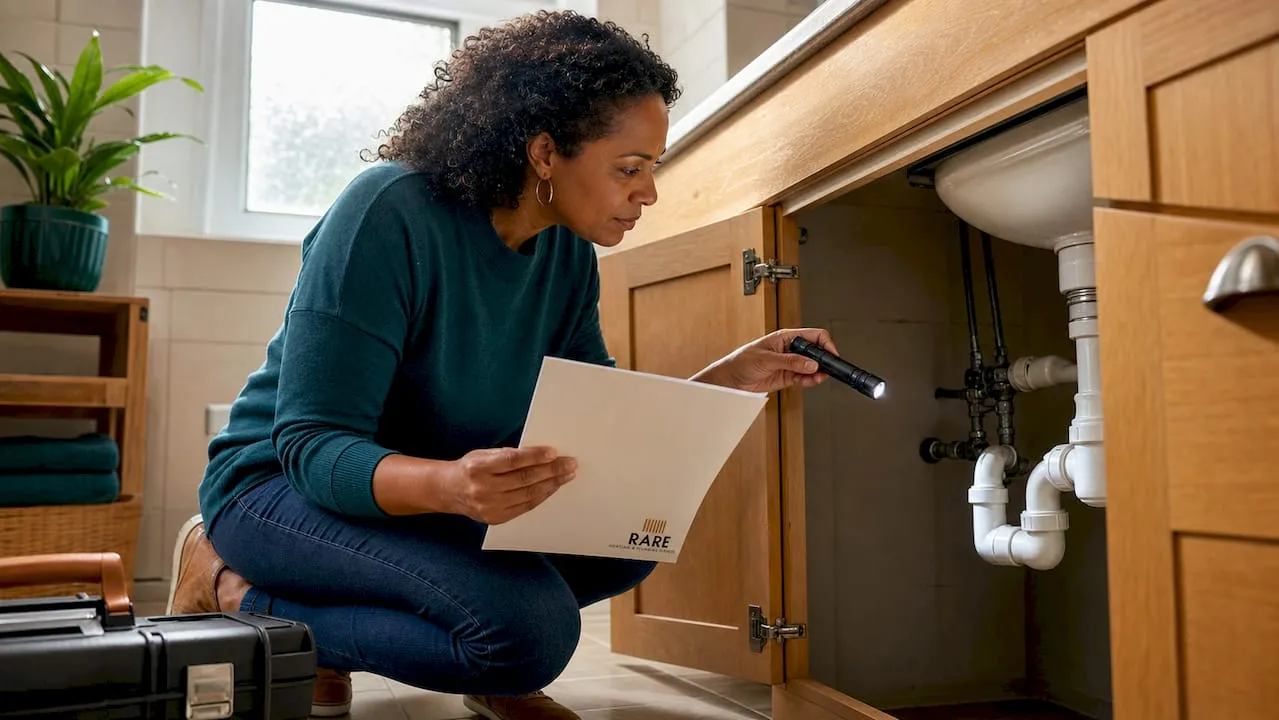
Before you sign anything, assess your property’s plumbing system honestly. A pre-contract inspection identifies existing faults, ageing pipework, and components that are likely to fail. Without this step, you risk absorbing repair costs for problems that predate the agreement.
The three main types of plumbing maintenance agreements
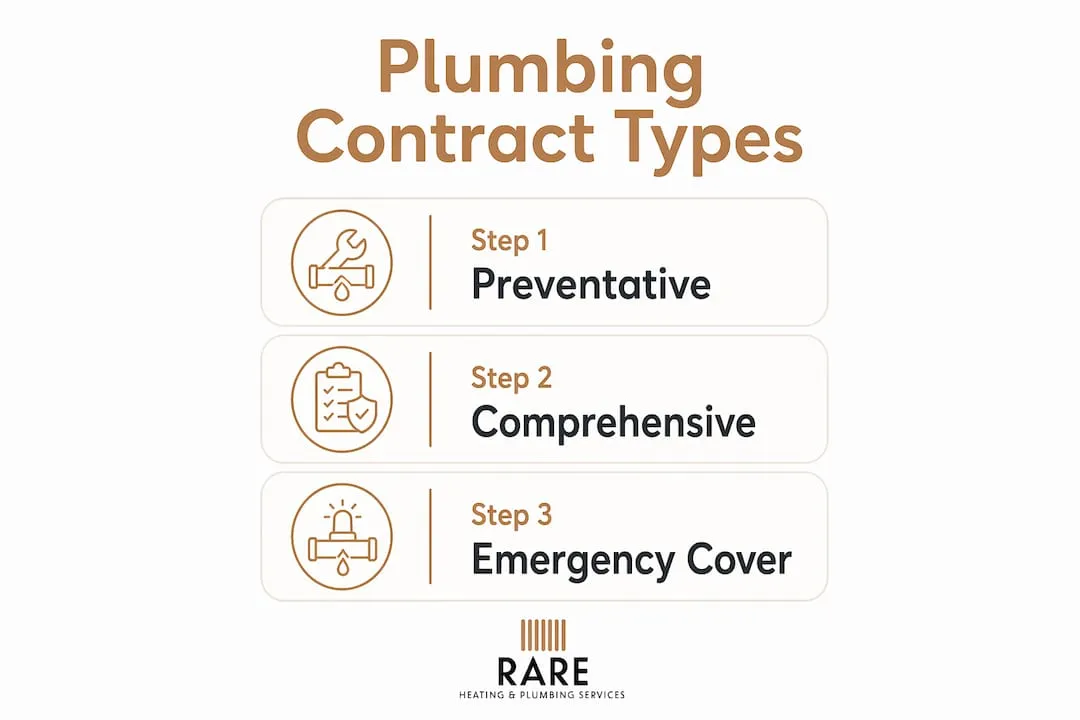
Understanding the types of plumbing maintenance agreements available helps you choose the right level of cover.
- Preventative maintenance agreements cover scheduled inspections and servicing at fixed intervals, typically quarterly or annually. The goal is to catch faults before they become failures.
- Emergency-only agreements provide priority call-out cover without routine visits. These suit properties with newer systems that need little routine attention.
- Comprehensive agreements combine scheduled visits, emergency cover, parts, and labour under a single annual fee. This is the most common choice for property managers overseeing multiple sites.
Each type carries different exclusions. Comprehensive plans often exclude pre-existing conditions, cosmetic repairs, and damage caused by misuse. Read the exclusions section of any draft contract before negotiating the fee.
Documents to prepare before you engage a contractor
Gathering the right paperwork before your first meeting with a contractor saves time and prevents ambiguity later.
- A recent plumbing inspection report or boiler service record
- A floor plan or schematic showing pipe runs, stopcocks, and drainage points
- A list of all plumbing appliances, their ages, and any known faults
- Your current insurance policy, to check for overlap with proposed contract cover
- A scope definition document outlining which systems you want covered
Pro Tip: Request a pre-contract inspection from your shortlisted contractor before signing. Any faults found should be quoted separately, not absorbed into the maintenance fee.
Pre-existing conditions clauses protect both parties: the contractor avoids absorbing major repair costs, and you avoid unexpected charges appearing on your maintenance invoice.
Step-by-step process for setting up a plumbing service agreement
Step 1: Identify and vet qualified contractors
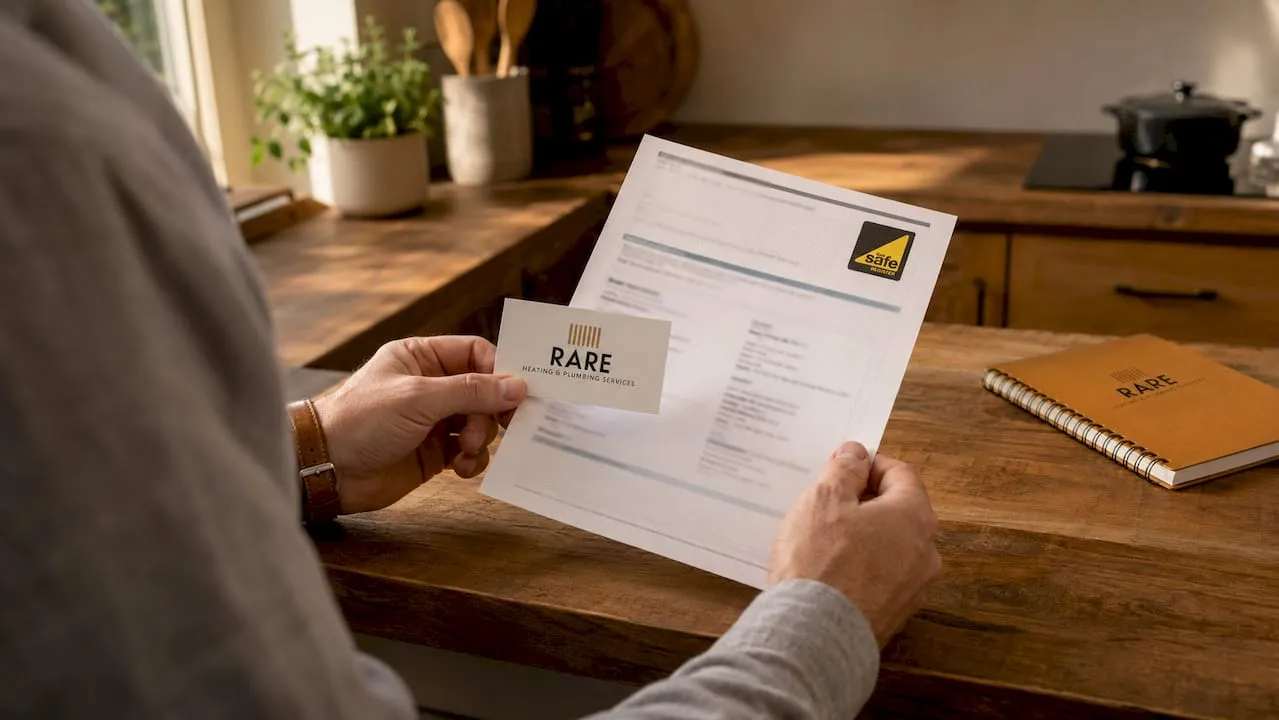
A Gas Safe registered contractor is the minimum requirement for any work involving gas appliances. For broader plumbing and heating cover, look for membership of the Chartered Institute of Plumbing and Heating Engineering (CIPHE) or the Association of Plumbing and Heating Contractors (APHC). Ask for references from current contract clients, not just one-off customers.
Step 2: Define the scope precisely
Vague language is the root cause of most contract disputes. Successful contracts specify exact system components covered, maximum labour time included per visit, and a clear list of exclusions. “Quarterly inspections” is not a scope. “Quarterly inspection of all visible pipework, two boilers, three hot water cylinders, and all accessible drain access points, with a maximum of three labour hours per visit” is a scope.
Step 3: Set visit schedules and reporting requirements
Define visit frequency in writing. Quarterly visits are standard for commercial properties. Annual visits suit most residential properties with modern systems. Each visit must produce a written report. A structured report with photos after every visit is the single most effective tool for turning a one-off repair relationship into a long-term maintenance contract. It builds trust and creates a documented history of your system’s condition.
Step 4: Negotiate pricing and discounts
Annual fees for plumbing maintenance plans vary widely by property type and scope. Commercial contracts with multiple sites attract meaningful savings. Multi-site contracts typically deliver discounts of 15–25% on reactive repair work compared to standard call-out rates. That discount alone often justifies the annual fee for property managers overseeing three or more units.
The table below shows the key pricing variables to negotiate:
| Variable | What to negotiate |
|---|---|
| Annual maintenance fee | Fixed price for all scheduled visits and labour within scope |
| Reactive repair discount | 15–25% reduction on call-out rates for contract holders |
| Emergency response time | 4-hour priority response guaranteed in writing for contract clients |
| Parts coverage limit | Maximum spend on parts per visit or per year |
| Cancellation terms | Notice period, refund policy, and exit conditions |
Step 5: Confirm payment terms and escalation procedures
Agree on whether the annual fee is paid upfront or in monthly instalments. Specify what happens if a repair exceeds the agreed parts limit. Define an escalation path: who you contact if a visit is missed, a report is not delivered, or a repair is disputed. These details feel administrative until you need them.
Pro Tip: Always include a clause requiring written sign-off from you before any repair work outside the agreed scope begins. This prevents invoice surprises.
How to manage and maintain your plumbing contract effectively
A signed contract is the beginning, not the end. Effective contract management determines whether you actually receive the service you paid for.
Build a record-keeping system from day one
Every maintenance visit should generate a written report, photographs of the work completed, and a list of parts used or recommended. Professional property managers use a report-after-every-visit system that creates defensible documentation for insurance claims, warranty disputes, and compliance audits. Store these records digitally, organised by property and date.
For property managers overseeing concierge-managed buildings, this documentation trail is particularly valuable when reporting to building owners or leaseholders.
Monitor contractor performance actively
Track three metrics for every contractor: response time against the agreed SLA, report delivery within 24 hours of each visit, and the ratio of reactive call-outs to scheduled visits. A rising reactive call-out rate suggests the scheduled maintenance is not catching faults early enough. Raise this with your contractor before the contract renewal date.
“Transitioning from reactive to recurring plumbing services depends entirely on the quality of reporting. A contractor who delivers clear, photographic reports after every visit builds the trust that justifies a long-term agreement. One who does not is costing you money in ways that do not appear on any invoice.”
Handle pre-existing conditions separately
When a maintenance visit uncovers a fault that predates the contract, that repair must be quoted and invoiced separately. Contracts should include a clause that explicitly excludes pre-existing major faults from the maintenance fee. This protects your contractor’s margins and prevents your annual fee from quietly subsidising repairs that should have been addressed before the agreement began.
Common mistakes when setting up and using plumbing maintenance contracts
Most contract failures trace back to decisions made before the ink dried. Recognising these mistakes early saves money and avoids disputes.
- Vague scope definitions. Phrases like “general maintenance” or “as required” give contractors discretion you did not intend to grant. Every covered component must be named.
- Failing to separate statutory compliance tasks. Separating statutory compliance tasks from general maintenance is a legal requirement for property managers. Legionella risk assessments, gas safety certificates, and pressure vessel inspections each carry specific legal obligations. Bundling them into a general maintenance clause creates compliance gaps.
- Ignoring the reporting requirement. A contractor who does not deliver written reports after visits is not fulfilling the contract. Require reports as a contractual obligation, not a courtesy.
- Overlooking emergency call-out limits. Some agreements cap the number of emergency call-outs per year. Check this figure before signing, particularly for older properties where reactive demand is higher.
- Underestimating the value of response time guarantees. A 4-hour priority response is meaningless without a written SLA. Verbal assurances do not hold up when a burst pipe floods a flat at 11PM on a Sunday.
Pro Tip: Ask your contractor to walk you through a sample contract they use with existing clients. How they respond tells you as much as the document itself.
For guidance on what a summer maintenance checklist covers, Rareplumbing publishes a detailed breakdown of the annual tasks typically included in residential service agreements.
Home service contractors who want to understand how contract quality affects client retention can find useful context at Stellor’s home services resource, which covers operational and marketing factors relevant to service agreement businesses.
Key takeaways
A well-structured plumbing maintenance contract requires a precise scope, written reporting obligations, and separate treatment of pre-existing conditions to deliver reliable service and prevent disputes.
| Point | Details |
|---|---|
| Define scope precisely | Name every covered component and set maximum labour hours per visit to prevent disputes. |
| Separate compliance tasks | Keep statutory obligations like Legionella control distinct from general maintenance to avoid legal gaps. |
| Require written reports | Insist on photographic reports after every visit to protect your position in insurance and warranty cases. |
| Negotiate multi-site discounts | Property managers with multiple units can secure 15–25% off reactive repair rates through volume contracts. |
| Address pre-existing conditions | Any fault predating the contract must be quoted separately, not absorbed into the maintenance fee. |
Why the reporting clause is the most underrated part of any plumbing contract
After working in and around plumbing maintenance for many years, the clause I see clients overlook most consistently is the reporting requirement. Homeowners focus on the annual fee and the emergency response time. Property managers fixate on the discount rate. Almost nobody reads the reporting section carefully.
That is a costly mistake. The report after each visit is your only evidence that the work was done, done correctly, and done to the standard the contract requires. Without it, you cannot make an insurance claim, challenge a disputed invoice, or demonstrate compliance to a building owner. I have seen property managers lose significant sums in disputes that a single photograph would have resolved in their favour.
My advice is direct: if a contractor cannot commit to a written, photographic report within 24 hours of every visit, do not sign the contract. That reluctance tells you something important about how they operate. The contractors who deliver consistently are the ones who document consistently. The two go together without exception.
When I look at the annual maintenance visits Rareplumbing carries out across Central London, the documentation standard is non-negotiable. Every visit produces a report. Every report includes photographs. That is not a selling point. It is the baseline.
— Paresh
How Rareplumbing supports your plumbing maintenance contract
Rareplumbing provides maintenance contracts for both residential and commercial properties across Central London, with over 25 years of service history behind every agreement.
Every contract includes fixed pricing before work begins, structured photographic reports after each visit, and a 2-hour emergency response for contract holders. For property managers overseeing multiple sites, Rareplumbing’s commercial plumbing contracts include priority scheduling and volume-based pricing. Homeowners looking for annual cover can review the membership plans that bundle routine servicing, emergency call-outs, and transparent repair rates into a single annual arrangement. The Gas Safe registered team covers boiler servicing, pipework, drainage, and heating systems under one agreement.
FAQ
What does a plumbing maintenance contract typically cover?
A standard plumbing maintenance contract covers scheduled inspections, emergency call-outs, and repair work up to an agreed annual limit, typically £1,000–£2,000. Parts, labour, and response time guarantees are usually included, with exclusions for pre-existing conditions and cosmetic repairs.
How often should maintenance visits be scheduled?
Quarterly visits are standard for commercial properties and multi-unit developments. Annual visits suit most residential properties with modern systems, though older properties benefit from twice-yearly inspections.
What is the difference between a preventative and a comprehensive agreement?
A preventative agreement covers scheduled inspections only. A comprehensive agreement adds emergency call-out cover, parts, and labour under a single annual fee, making it the better choice for property managers and high-value residential properties.
How do I protect myself if a contractor finds a pre-existing fault?
Include a clause in the contract requiring any pre-existing fault to be quoted separately before repair work begins. Pre-existing conditions must not be absorbed into the maintenance fee without your written approval.
Can property managers negotiate better rates on plumbing contracts?
Property managers overseeing multiple sites regularly secure discounts of 15–25% on reactive repair work through volume-based maintenance agreements. Negotiate this rate explicitly before signing, and confirm it applies to emergency call-outs as well as scheduled repairs.
Recommended
Talk to a specialist today.
Our Gas Safe engineers are available same-day across Central and North London. No call-out charge quoted upfront. No obligation.
Related Services