

Quick Answer
Discover essential ways to prepare for a home boiler fitting. Follow our checklist for a smooth installation and avoid last-minute hassles.
Getting a boiler fitted goes far more smoothly when you do the groundwork beforehand. The key ways to prepare for a home boiler fitting come down to five things: clear the installation area, locate your main controls, plan for a day without heating and hot water, sort out access and parking, and have a proper pre-installation survey. Do those five things and you remove most of the friction before the engineer even arrives.
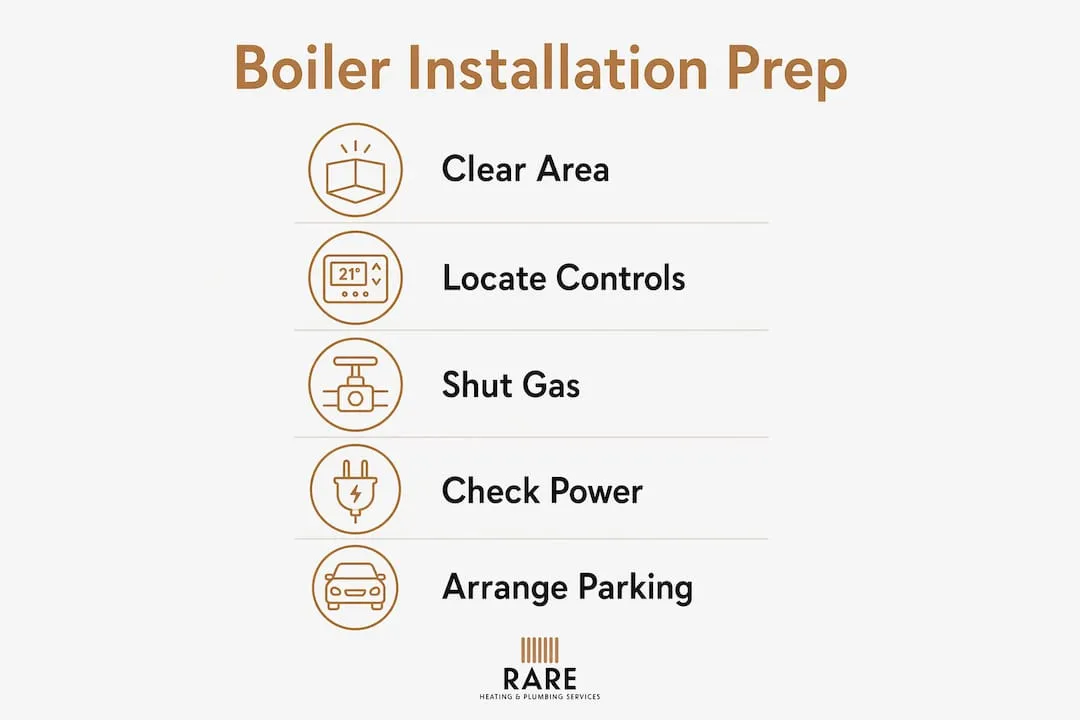
Here is a quick checklist to act on immediately:
- Move furniture and stored items away from the boiler, radiators, and any pipework runs
- Locate your main water stopcock, gas shut-off valve, and consumer unit (fuse box)
- Tell everyone in the household about the installation date and expected downtime
- Reserve a parking space as close to your front door as possible for the engineers
- Clear hallways and doorways so equipment can be carried in without obstruction
- Secure pets in a separate room and arrange safe activities for young children
- Confirm the installation date, start time, and estimated duration with your installer
How to clear and prepare the boiler installation area
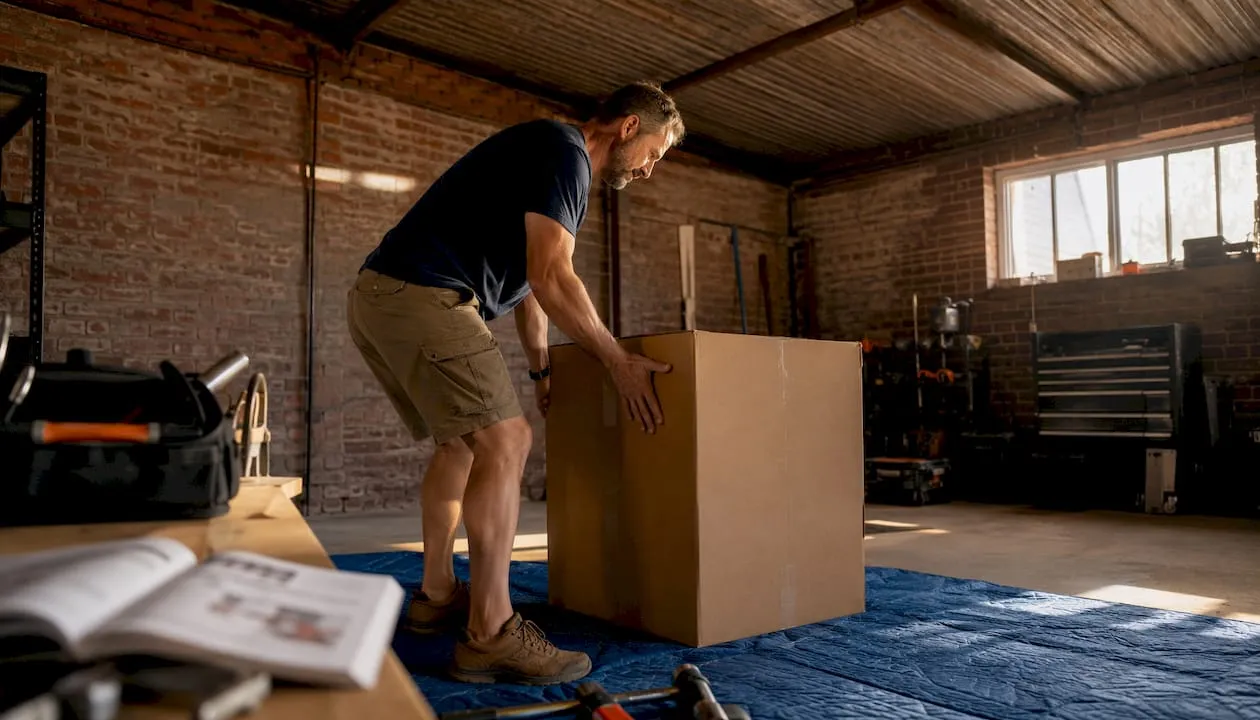
The single most useful thing you can do before installation day is give the engineers room to work. A cluttered boiler cupboard or a kitchen full of boxes slows everything down and raises the risk of accidental damage to your belongings.
- Remove all items from the boiler cupboard, floor to ceiling, not just the shelf nearest the unit
- Move furniture blocking radiators or pipe runs in other rooms
- Lay dust sheets or old towels over carpets and flooring near the work area
- Open windows in the work area for ventilation, particularly if the engineer will be cutting or drilling
- Make sure the consumer unit, gas meter, and any loft tanks are accessible for engineers
- Move fragile ornaments, glassware, or framed pictures away from walls near the boiler
If your boiler is in the loft, the requirements go further. Loft boiler installations require a permanent loft ladder, fixed lighting, and secure boarding as legal safety conditions. Check these are in place before booking.
Pro Tip: Think beyond the boiler wall itself. Engineers often need to trace pipework through airing cupboards, under floors, or into adjacent rooms. Walk the likely pipe routes and clear those spaces too, not just the immediate installation spot.
A practical guide on preparing spaces for contractors covers the kind of access clearance that makes a real difference on the day.
Where are your key controls, and are they accessible?
Knowing where your controls are is not just useful background knowledge. On installation day, your engineer may need to reach them quickly, and a scramble to find the stopcock wastes time and can create safety risks.
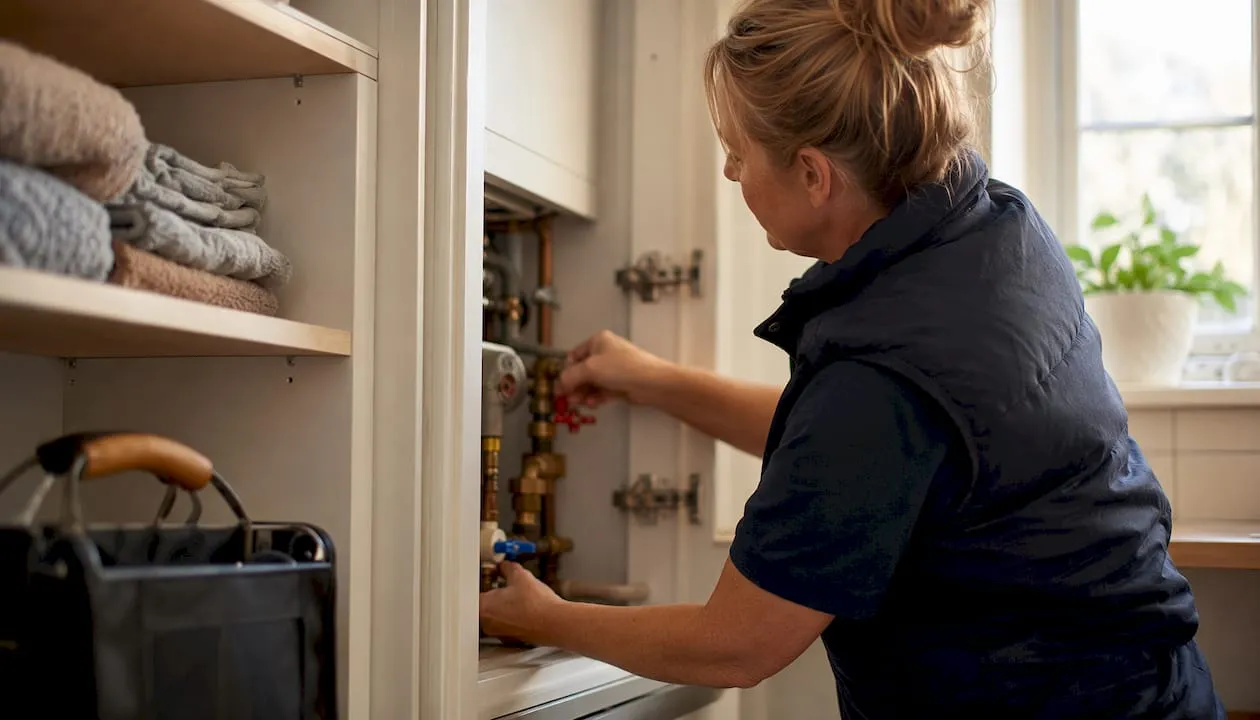
- Main water stopcock: usually under the kitchen sink or where the supply pipe enters the property. Check it turns freely before the day
- Gas shut-off valve: located next to the gas meter. Turning it 90 degrees closes the supply
- Consumer unit (fuse box): your engineer may need to isolate the boiler’s electrical circuit
- Thermostat and heating programmer: know where these are so you can point the engineer to them quickly
- Loft tanks or hot water cylinders: if your system has these, make sure the route to them is clear
Keep all these areas free of clutter on installation day. If any valve is stiff or has not been turned in years, mention it to your installer beforehand.
Planning for disruption during the boiler fitting
Most homeowners underestimate installation downtime. A straightforward like-for-like swap typically takes one day, but more complex jobs can run to 1–3 days depending on pipework changes, flue rerouting, or system upgrades. Plan for the longer end.
- Expect most of the working day without heating and hot water
- Boil kettles and fill flasks before work starts; think about meals that need minimal washing up
- If the installation runs into winter, have portable electric heaters and extra blankets ready
- Arrange for elderly relatives, very young children, or anyone with health conditions to spend the day somewhere warmer
- Keep pets in a separate room with the door closed; noise levels will be high and external doors may be left open
- Tell all household members the night before, not the morning of, so nobody is caught off guard
For a broader look at keeping your system ready through the colder months, the winter boiler preparation checklist from Rareplumbing covers the overlap between seasonal readiness and pre-installation prep.
Sorting out logistics and communication with your installer
Good logistics on installation day come down to decisions made the week before. Clear pathways and parking are not minor niceties; carrying heavy equipment from a distant parking spot adds time and physical strain to a job that is already demanding.
- Confirm the installation date, estimated start time, and expected duration in writing
- Reserve a parking space directly outside your property; if you have a permit zone, arrange a visitor permit in advance
- Clear hallways, stairs, and doorways of shoes, bags, bikes, or anything else that narrows the route
- Remove items from doors that open inward into the work area
- Keep your phone on and nearby throughout the day in case the engineer needs to ask a question
- Check whether Building Regulations notification is required; your Gas Safe registered engineer can handle this via the Gas Safe self-certification route, but confirm it is included in your quote
Why the pre-installation survey matters more than most homeowners realise
The pre-installation survey is where the real preparation happens. A thorough survey finalises the boiler specification, identifies pipework upgrades, confirms the flue route, and surfaces any access issues before they become mid-job surprises. Skipping it, or treating it as a formality, is where unexpected costs tend to originate.
During the survey, your engineer will check gas pipe sizing, assess the condition of existing radiators and pipework, plan the condensate drainage route, and confirm flue terminal positioning. Flue positioning must comply with safety regulations and remain accessible for future maintenance; getting this wrong can mean expensive scaffolding later.
Installation duration: a standard boiler swap takes one day; more complex installations involving pipework changes or a new flue route can take up to three days.
Pro Tip: Use the survey conversation to discuss smart controls, magnetic filters, and system upgrades. These are far easier and cheaper to include in the original installation than to retrofit six months later.
For complex properties, the commercial boilers in large domestic homes guide from Rareplumbing covers the additional survey considerations that apply to larger heating systems.
Checking your electrical supply and compatibility
Gas boilers still need a reliable electrical supply for controls, ignition, and the programmer. Before installation day, check that the existing wiring and fuse rating are adequate for the new unit.
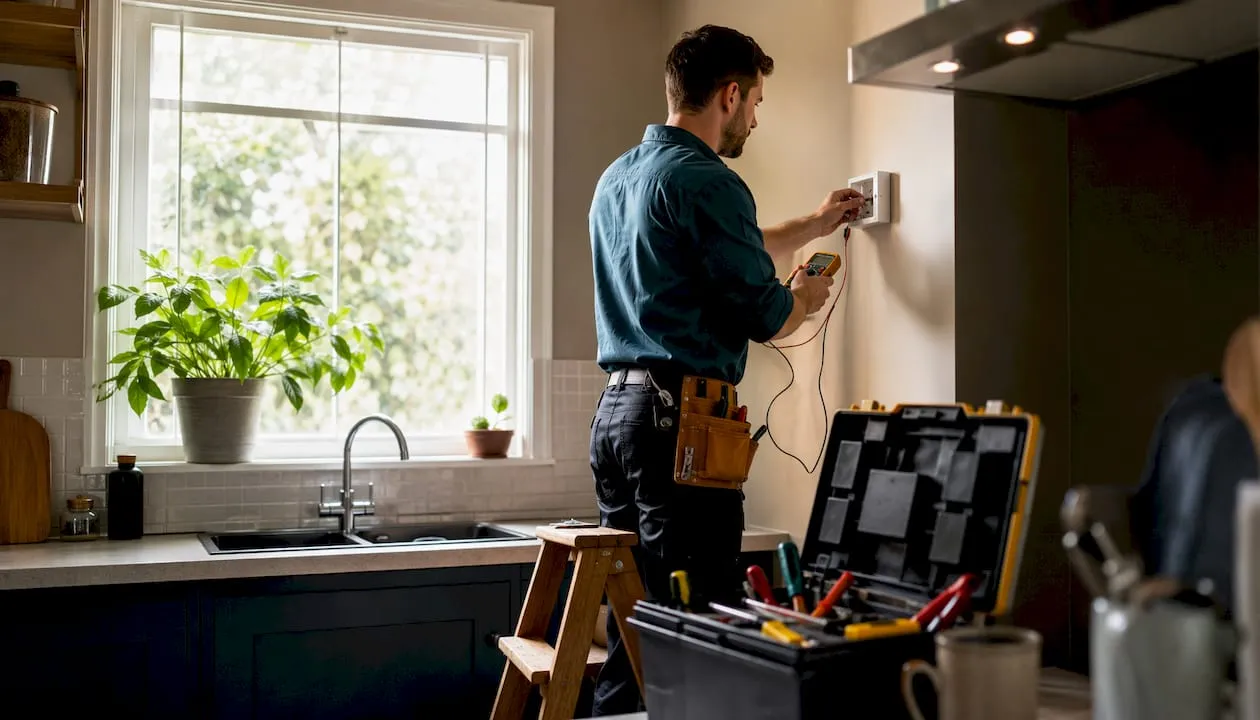
Your engineer will need a switched fused spur with a 3A fuse as the dedicated supply. If your current setup uses an older unswitched connection or the wiring shows signs of wear, arrange for a qualified electrician to assess it before the boiler goes in. Earth bonding to gas pipes is also a legal requirement. Catching an electrical issue at the survey stage costs far less than discovering it mid-installation.
Arranging for the water supply shut-off
Before the engineer disconnects the old boiler, turn off the gas supply at the valve near the gas meter and close the main water shut-off valve. Drain the heating system to remove residual water and reduce the risk of leaks when pipework is disconnected.
Your engineer will handle most of this on the day, but knowing where your stopcock is and confirming it operates smoothly beforehand saves time. If the valve is seized or corroded, flag it to your installer in advance so they can bring the right tools. Fill a couple of large containers with water the evening before for drinking and basic washing while the supply is off.
Rareplumbing: fixed-price boiler fitting for London homes
Rareplumbing brings over 25 years of Gas Safe registered expertise to boiler installations across Central London, with one concrete difference from the standard experience: a fixed written quote before any work begins. No revised figures mid-job, no ambiguity about what is included. For homeowners in high-value properties where disruption and cost uncertainty are the two things they most want to avoid, that transparency matters.
The team handles everything from the pre-installation survey through to commissioning, Building Regulations notification, and the Benchmark handover document. If your property has specific requirements, such as a loft installation, a system conversion, or underfloor heating integration, Rareplumbing’s engineers assess those at survey stage rather than flagging them as extras on the day.
Request a boiler quote and get a fixed price for your installation before committing to anything.
Key takeaways
Thorough preparation before a boiler fitting prevents delays, protects your home, and gives your Gas Safe engineer the conditions to work safely and efficiently from the start.
| Point | Details |
|---|---|
| Clear the full access route | Remove items from the boiler cupboard, hallways, and pipe run areas, not just the immediate boiler wall. |
| Locate controls in advance | Know where your stopcock, gas shut-off valve, and consumer unit are before the engineer arrives. |
| Plan for downtime lasting from one day for a standard swap, up to three days for complex jobs. Prepare hot water alternatives and heating backup. | |
| Confirm the survey covers flue and pipework | The pre-installation survey should finalise flue routing, pipework upgrades, and condensate drainage before work begins. |
| Rareplumbing | Fixed written quotes and Gas Safe registered engineers for boiler installations across Central London. |
FAQ
How do I prepare for a boiler installation?
Clear the area around the boiler and along pipe routes, locate your stopcock and gas shut-off valve, arrange parking for the engineers, and plan for a day without heating and hot water. Inform everyone in the household the night before.
Can you legally install your own boiler?
No. In the UK, gas boiler installation must be carried out by a Gas Safe registered engineer under the Gas Safety (Installation and Use) Regulations. The work must also be notified to Building Control.
Is fitting a new boiler a big job?
A straightforward like-for-like swap typically takes one day. More complex installations involving a new flue route, pipework changes, or a system conversion can take up to three days.
What is the 3 tee rule for heating?
The 3 tee rule is a pipework configuration used in some heating systems to balance flow across multiple circuits. Its application depends on your specific system layout; your Gas Safe engineer will confirm whether it applies during the pre-installation survey.
Recommended
Talk to a specialist today.
Our Gas Safe engineers are available same-day across Central and North London. No call-out charge quoted upfront. No obligation.
Related Services