

Quick Answer
Explore the top types of heating systems for luxury developments. Learn how to meet future standards while ensuring comfort and efficiency.
TL;DR:
- Heating systems for luxury developments must be low-carbon, highly efficient, and compliant with the Future Homes Standard by 2026.
- Wet underfloor heating paired with air-source heat pumps offers the best efficiency and thermal comfort, making it the top choice for new builds.
- Proper installation, building fabric, and smart controls are essential for optimal system performance and long-term value.
Heating systems for luxury developments are defined by three requirements: low-carbon operation, high thermal comfort, and compliance with the Future Homes Standard, which prohibits fossil-fuel gas boilers in new residential builds from 2026 onwards. The standard mandates a 75–80% reduction in carbon emissions compared to previous building regulations. That figure alone changes every specification decision a developer makes. The types of heating systems luxury developments now require go far beyond a condensing boiler and a set of radiators. This guide covers the leading options, from wet underfloor heating paired with air-source heat pumps to Heat Interface Units in communal schemes, so you can choose with confidence.
1. Why wet underfloor heating with air-source heat pumps leads the field
Wet underfloor heating (UFH) combined with an air-source heat pump (ASHP) is the top heating solution for luxury new builds in 2026. The pairing achieves a Seasonal Coefficient of Performance of 3.5 to 4.5, meaning the system produces up to 4.5 units of heat for every unit of electricity consumed. That efficiency translates to estimated savings of around £470 annually in a typical three-bedroom new build compared to a gas boiler. For a luxury property with a larger floor area, the savings scale considerably higher.
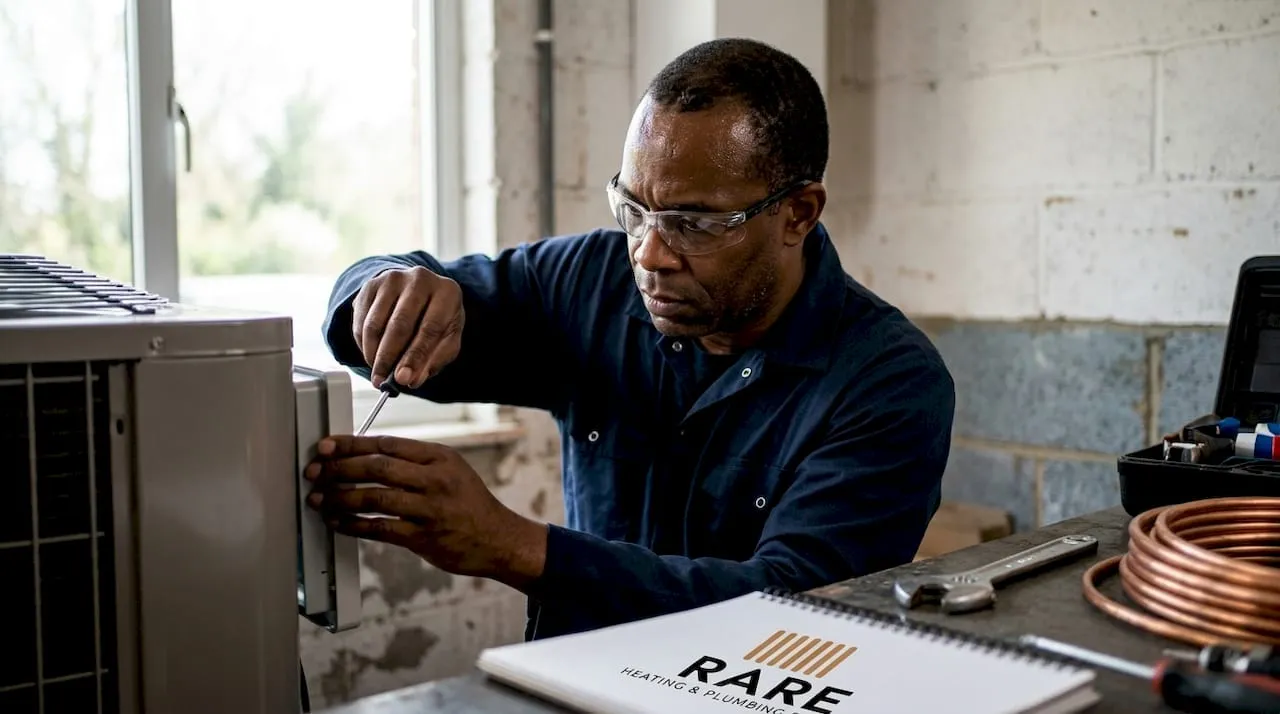
UFH also delivers a quality of warmth that radiators cannot match. Heat radiates evenly from the entire floor surface, eliminating cold spots and removing the visual clutter of wall-mounted units. Architects and interior designers working on high-end projects consistently favour UFH because it leaves walls entirely free for glazing, artwork, and bespoke joinery.
The one technical challenge is thermal lag. UFH systems respond slowly to temperature changes because the screed or floor build-up must heat up before warmth reaches the room. Smart zoning controls with predictive thermostats solve this by learning occupant habits and pre-heating rooms before they are needed.
- ASHP operates most efficiently at low flow temperatures (35°C–45°C), which UFH is designed for
- Multi-zone thermostats allow independent control of each room or floor
- Manifold systems distribute water evenly across heating circuits
- Heat pump placement requires acoustic planning to avoid noise transfer into living spaces
Pro Tip: Specify a weather-compensating controller alongside your ASHP and UFH. The controller adjusts flow temperature based on outdoor conditions, keeping the heat pump running at peak efficiency year-round.
2. Heat Interface Units for luxury apartments and communal heating
Heat Interface Units (HIUs) are the standard solution for luxury apartment buildings connected to district or communal heating networks. Each apartment receives its own HIU, which extracts heat from the shared network and provides individual control over heating and hot water. This gives residents the autonomy of a private system while the building benefits from the economies of centralised plant.
The critical issue is installation quality. Poor HIU installation causes high-frequency pipe noise and uneven heating distribution, both of which are completely unacceptable in a luxury market. Balancing the communal network is equally important. Without correct hydraulic balancing across the plant room and all risers, some apartments receive too much heat and others too little.
For developers specifying HIUs, the following points are non-negotiable:
- Commission a full hydraulic balancing exercise before handover
- Specify low-noise HIU models rated for residential acoustic environments
- Install HIUs in dedicated cupboards with acoustic lining to contain any residual noise
- Ensure plant room design accounts for peak simultaneous demand across all units
- Include remote monitoring capability so building managers can identify faults before residents notice them
HIUs also integrate cleanly with smart home technology, allowing residents to control heating via app or voice command. That level of control is now an expectation, not a luxury, in the premium apartment market.
3. Low-temperature radiators, trench heating, and ambient loop systems
Not every luxury project suits UFH as the sole heat emitter. Three alternatives deserve serious consideration depending on the building’s architecture and constraints.
Low-temperature radiators remain a practical option, particularly in retrofit luxury projects where installing UFH would require significant floor build-up. Radiators designed for a 45°C flow temperature require a greater surface area than traditional 75°C models, but correctly sized low-temperature radiators work effectively with heat pumps. The key is to design the system from the outset around the lower flow temperature rather than retrofitting standard radiators.
Trench heating solves a specific problem that affects many luxury towers and penthouses: floor-to-ceiling glazing. Large glass facades create cold downdraught zones that UFH alone cannot adequately address. Trench heating at One Tower Bridge demonstrates this clearly. Convector units set into floor-level trenches along the glazing line create a warm air curtain that prevents cold air from reaching occupants. The result is thermal comfort right up to the glass, which is exactly what a premium riverside apartment demands.
Ambient loop systems represent the most architecturally discreet solution. A centralised plant room circulates water at a moderate temperature around a loop serving the entire building. Individual apartments extract heat using water-to-water heat pumps or HIUs. The key advantage is that ambient loop systems eliminate external ASHP units on building facades, preserving the clean lines that luxury architecture demands and removing acoustic concerns at apartment level.
Pro Tip: On projects with extensive south-facing glazing, combine trench heating along the glass line with UFH in the main living areas. The two systems complement each other and give occupants precise comfort control across the entire floor plate.
4. How building fabric determines which heating system works
Building fabric is the single biggest factor in heating system performance. Heat pumps lose efficiency in poorly insulated buildings, and the running cost savings that justify their higher capital cost disappear if the thermal envelope is not up to standard. This is not a peripheral consideration. It is the foundation of every heating system decision in a luxury development.
A well-specified thermal envelope for a luxury new build includes:
- Triple-glazed windows and thermally broken frames to eliminate cold bridging at openings
- Continuous insulation layers with no gaps at junctions between walls, floors, and roofs
- Airtightness testing to confirm the building performs to its design specification
- Mechanical ventilation with heat recovery (MVHR) to maintain air quality without losing heat through trickle ventilation
When the fabric performs well, the heat pump can operate at lower flow temperatures, which raises its efficiency rating and reduces electricity consumption. The relationship is direct: better insulation means a smaller, cheaper heat pump running at a higher SCOP. For luxury developers, investing in fabric quality is not just a compliance measure. It is a cost reduction strategy that improves the building’s EPC rating and long-term operating costs for residents.
Smart zoning compounds the benefit. A well-insulated building retains heat longer, so zoned controls can reduce output in unoccupied rooms without the temperature dropping uncomfortably fast. That combination of fabric and controls is what separates a genuinely efficient luxury home from one that merely looks the part.
5. Energy efficiency, cost, and regulatory compliance
The Future Homes Standard makes low-carbon heating mandatory for all new residential developments from 2026. Gas boilers are prohibited. Every developer specifying heating systems for upscale properties must plan around heat pumps, HIUs, or district heating as the primary heat source.
The financial case is equally compelling. Upgrading a property’s EPC rating by one band increases market value by 3–5%. Efficient heating systems are the fastest route to that improvement. For a luxury property valued at £2 million, a one-band EPC improvement adds £60,000–£100,000 to the sale price.
| Heating system | Typical flow temperature | SCOP range | Future Homes Standard compliant |
|---|---|---|---|
| ASHP with wet UFH | 35°C–45°C | 3.5–4.5 | Yes |
| Ambient loop with HIU | 15°C–25°C loop | System-dependent | Yes |
| Low-temperature radiators with ASHP | 45°C–55°C | 2.8–3.5 | Yes |
| Gas boiler (any configuration) | 60°C–80°C | Not applicable | No |
Lifecycle costs matter as much as installation costs in luxury projects. Heat pumps carry higher upfront costs than gas boilers, but their running costs are lower and their maintenance requirements are predictable. Specifying a Rareplumbing heating engineer for annual servicing keeps systems running at peak performance and protects the warranties that underpin a developer’s liability position.
Key takeaways
The best heating solutions for luxury homes combine low-carbon heat sources with high-quality building fabric, smart controls, and system-specific design to deliver comfort, compliance, and long-term value.
| Point | Details |
|---|---|
| ASHP with UFH leads on efficiency | A SCOP of 3.5–4.5 and £470 annual savings make this the top choice for luxury new builds. |
| HIUs require precise installation | Poor commissioning causes noise and uneven heat; hydraulic balancing before handover is non-negotiable. |
| Building fabric sets the ceiling | Heat pump efficiency depends on insulation and airtightness; invest in fabric before specifying plant. |
| Trench heating solves glazing problems | Floor-to-ceiling glass needs trench convectors to prevent cold downdraughts that UFH cannot address alone. |
| EPC improvement adds real value | A one-band EPC uplift increases property value by 3–5%, making efficient heating a direct investment return. |
What I have learned specifying heating for luxury projects
The most common mistake I see in luxury heating specifications is treating the heating system as a late-stage decision. By the time the mechanical engineer is appointed, the architect has already fixed the floor-to-ceiling heights, the structural engineer has set the slab depths, and the facade consultant has specified the glazing. Every one of those decisions affects the heating system, yet the heating engineer was not in the room when they were made.
The projects that deliver genuine comfort and efficiency are the ones where the heating consultant sits alongside the architect from the concept stage. That collaboration determines whether UFH is feasible within the floor build-up, whether the plant room is large enough for the HIU array, and whether the facade design creates downdraught zones that need trench heating. Getting those answers at concept stage costs almost nothing. Getting them at construction stage costs a great deal.
I have also noticed that developers underestimate how much residents notice heating quality. In a luxury apartment, a cold spot near the window or a faint pipe noise at 2AM is not a minor defect. It is a complaint that damages the developer’s reputation and triggers warranty claims. The Marylebone heating redesign we completed for a Central London client is a good example of what happens when a system is specified without adequate acoustic and thermal modelling. The remedial work cost significantly more than getting it right the first time would have.
My honest advice: treat the heating specification as a design discipline, not a compliance exercise. The best heating systems for upscale properties are invisible to the occupant. They simply work, quietly and reliably, at exactly the temperature the resident expects.
— Paresh
Rareplumbing’s approach to luxury heating installations
Rareplumbing has spent over 25 years specifying and installing heating systems for high-end residential and commercial properties across Central London. The team holds Gas Safe registration and brings direct experience with wet underfloor heating design, heat pump integration, and bespoke luxury projects where standard solutions simply do not apply.
Every project begins with a fixed quote before any work starts, so developers and homeowners know the full cost from day one. For ongoing peace of mind, the Rareplumbing membership programme provides priority access, annual servicing, and a two-hour emergency response. Whether you are specifying a new development or upgrading an existing luxury property, Rareplumbing delivers the technical depth and client care that high-value projects demand.
FAQ
What heating systems comply with the Future Homes Standard in 2026?
Air-source heat pumps, ambient loop systems, and district heating with HIUs all comply. Gas boilers are prohibited in new residential developments from 2026 under the Future Homes Standard.
Is wet underfloor heating suitable for luxury apartments?
Yes, particularly when paired with an ASHP or connected to a communal heating network via an HIU. UFH delivers even warmth and leaves walls free, which suits luxury apartment design.
How does trench heating differ from underfloor heating?
Trench heating uses convector units set into floor-level channels along glazed facades to create a warm air curtain. Underfloor heating warms the entire floor surface. The two systems are often used together in luxury towers with extensive glazing.
What is an ambient loop system?
An ambient loop system circulates water at a moderate temperature around a building loop. Individual apartments extract heat using water-to-water heat pumps or HIUs, eliminating external ASHP units and reducing facade noise.
Does a better EPC rating increase property value?
Upgrading a property’s EPC rating by one band increases market value by 3–5%. Efficient heating systems, particularly heat pumps with UFH, are the most direct route to achieving that improvement.
Recommended
Talk to a specialist today.
Our Gas Safe engineers are available same-day across Central and North London. No call-out charge quoted upfront. No obligation.
Related Services